
Last updated: June 2026
Air duct cleaning rarely gets attention until a problem makes it impossible to ignore. A persistent smell from the vents, an allergy flare that won’t settle, or a renovation that left construction dust circulating through the house can each be the trigger. By the time the signs are obvious, the HVAC system has often been circulating contaminated air for months.
This guide covers what professional air duct cleaning actually involves, how to know when you need it, what separates a thorough job from a partial one, and what results you can realistically expect. It’s written specifically for homes and commercial buildings in Charleston, Mount Pleasant, Summerville, Goose Creek, and the broader Lowcountry, where coastal humidity creates conditions that make duct maintenance more critical than in most parts of the country.
What Does Air Duct Cleaning Actually Include?
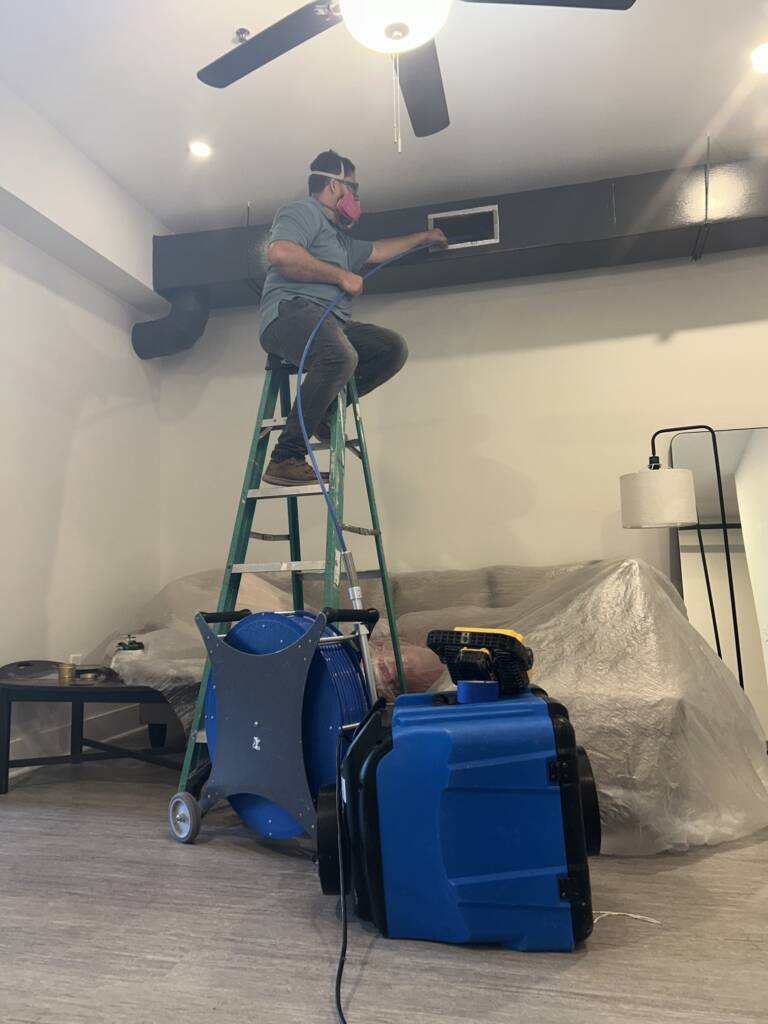
Air duct cleaning is a systematic process that addresses the entire HVAC pathway, from the air handler to every supply and return vent in the building. It is not a single spray, a quick vacuuming of visible vents, or a substitute for addressing the root cause of contamination.
The Components of Proper Cleaning Covers
A complete air duct cleaning service addresses every part of the system that moves air, not just the ductwork you can reach from a register. That includes:
- Supply and return air ducts
- Registers, grilles, and diffusers
- Heat exchangers and cooling coils
- Drip pans and condensate lines
- Fan motors and blower compartments
- Air handling unit
Skipping any of these components leaves contamination sources in place. A cleaning that only addresses accessible ductwork removes surface debris while leaving the system’s most vulnerable areas untouched.
What Air Duct Cleaning Can and Can’t Fix
Air duct cleaning removes the accumulated debris inside the system. It does not address the source of that accumulation.
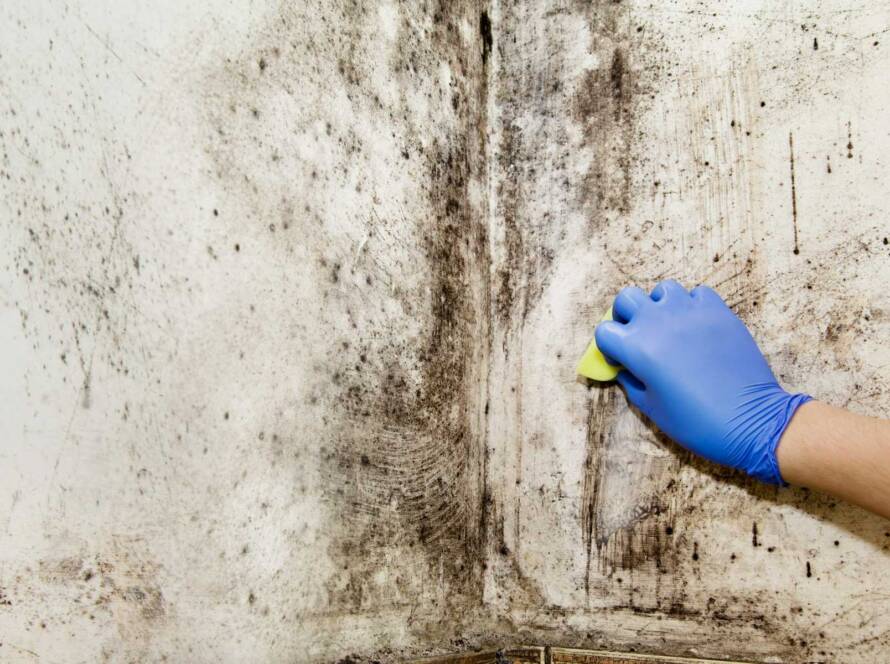
If moisture has allowed mold to develop inside the ductwork, cleaning the ducts without eliminating the moisture source will not resolve the problem. The mold will return. If contamination involves porous duct materials that have absorbed mold deeply into their structure, physical removal and replacement may be required rather than cleaning alone.
Our guide on cleaning air ducts for mold covers how to assess whether remediation or replacement is the right path when mold is the specific concern.
How Do Dirty Air Ducts Affect Your Home and Health?
The EPA takes a measured position: the agency notes that duct cleaning “has never been shown to actually prevent health problems” and cautions against sweeping health claims. What is well established is that HVAC systems can accumulate and distribute contaminants that affect indoor air quality. Source: U.S. Environmental Protection Agency
Contaminants found in poorly maintained duct systems include:
- Dust and particulate matter: shed skin cells, fabric fibers, tracked-in soil, and fine particles from combustion sources
- Biological growth: mold spores and bacteria that establish in areas of the system where moisture collects
- Allergens: pet dander, pollen, and dust mite debris that accumulate faster in humid coastal environments
- Odor compounds: residue from pets, smoke, cooking, and water events absorbed into duct surfaces over time
For most households, a moderate level of dust in the duct system poses no meaningful health risk. The situations that warrant genuine concern are specific: active mold growth, pest activity, visible debris released from registers, or contamination following a water or fire event. For people managing asthma, allergies, or compromised immune function, the threshold for action is lower.
If you want a clear picture of what’s in your air before committing to a service, professional air quality testing identifies specific contaminants and gives you an objective starting point.
What Are the Signs Your Air Ducts Need Cleaning?
In Your Home
The EPA recommends air duct cleaning when specific conditions are present, not on a fixed calendar schedule. The indicators that warrant a professional assessment include:
- Visible mold growth inside ducts or on any HVAC component
- Evidence of rodent or insect activity in the duct system
- Excessive dust is accumulating around supply vents despite regular filter changes
- Musty or stale odors that worsen when the system runs
- Allergy or respiratory symptoms that improve noticeably when occupants leave the house
- Recent renovation or construction that pushed debris into the system
Post-renovation contamination is more common than most Lowcountry homeowners expect. Drywall dust, insulation particles, and construction debris settle deep into ductwork during a remodel and continue circulating long after the job finishes. Our article on air duct cleaning after renovation covers what to expect and how to time the service based on the scope of work.
In Your Commercial Building
Commercial HVAC systems carry more air, serve more people, and interact with a wider range of contaminant sources. Indicators that warrant a professional assessment include:
- Tenant or staff complaints about air quality, persistent odors, or worsening respiratory symptoms
- Visible debris is being released from the supply registers
- HVAC energy costs are rising without a corresponding change in usage patterns
- Any event involving fire, water damage, or confirmed mold contamination in the building
- Systems serving sensitive populations: medical offices, schools, assisted living facilities, food production environments
Why Do Charleston Homes Need Air Duct Cleaning More Often?
Charleston’s climate creates conditions that accelerate duct contamination relative to drier regions. The combination of coastal humidity, warm temperatures for most of the year, and high ambient moisture means HVAC systems in Charleston manage far more humidity than systems in inland climates were designed to handle.
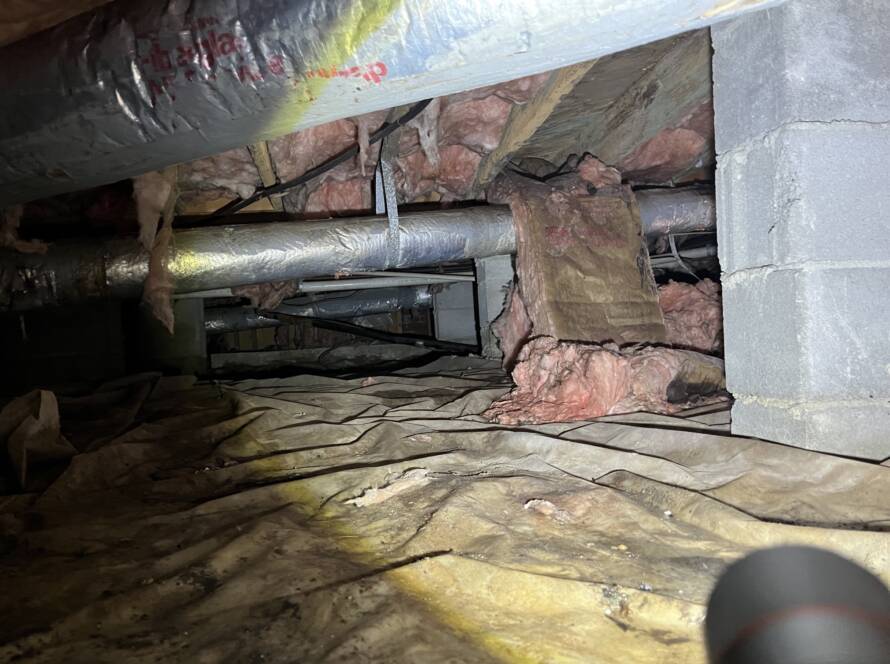
Homes with crawlspaces face an additional layer of risk that’s common throughout the Lowcountry. Unencapsulated crawlspaces allow ground moisture to continuously enter the home, raising indoor humidity levels and increasing the HVAC system’s year-round moisture load. If your crawl space is unsealed, crawl space encapsulation addresses the moisture source directly, providing the necessary complement to cleaning what that moisture has already affected inside your ducts.
For a broader look at how the Lowcountry’s coastal environment affects the air inside your home, our complete guide to indoor air quality covers monitoring, testing, and region-specific factors.
Does the Type of Ductwork Affect How Air Ducts Are Cleaned?

Not all duct systems clean the same way. The material your ducts are made of affects how thoroughly they can be cleaned and which methods are appropriate, and this answer matters before any technician starts work.
Sheet metal (galvanized steel): The most durable and cleanable duct material. Sheet metal holds up well to rotary brushes, air whips, and the mechanical agitation required for thorough air duct cleaning. Most commercial systems and older residential construction in the Charleston area use sheet metal.
Flexible duct (flex duct): Spiral wire covered in plastic and insulation, used widely in residential construction for its low cost and ease of installation. Flex duct accumulates more debris in its bends and is more vulnerable to damage from aggressive cleaning methods. A properly trained technician adjusts the approach accordingly.
Fiberglass duct board: Compressed fiberglass panels used in some residential and light commercial systems. This material cannot be cleaned with rotary brushes without damaging the liner. When fiberglass duct board is found to be heavily contaminated, replacement is often the more appropriate response than cleaning.
Understanding what type of ductwork your system uses helps you ask the right questions of any provider and recognize when a one-size-fits-all approach is a red flag.
How Often Should Air Ducts Be Cleaned?
Residential Frequency
The EPA does not recommend air duct cleaning on a fixed schedule. Their guidance is to clean when conditions warrant it, not on a set interval. NADCA offers a more proactive baseline: every 3 to 5 years for most homes, and every 2 to 3 years for households with pets, smokers, or occupants managing allergies or asthma. For homes in Charleston and the surrounding Lowcountry, where coastal humidity accelerates buildup, annual inspections are a reasonable standard even when a full cleaning isn’t always the outcome.
Factors that shorten the interval between cleanings:
- Pets that shed heavily
- Smokers in the household
- Occupants with asthma, allergies, or compromised immune function
- An unencapsulated crawlspace creates elevated indoor humidity
- An older or less efficient HVAC system
Vacation and Seasonal Properties
Vacation homes throughout the Lowcountry face a specific risk. HVAC systems left dormant in humid coastal air accumulate moisture and support microbial growth when no one is present to notice. When the system starts up before peak season, whatever has built up in the off-months circulates immediately.
Our guide on off-season HVAC maintenance for vacation homes covers what to inspect before closing a property and what to address before occupancy resumes, including when a duct inspection should be part of the pre-season routine.
Commercial Frequency
NADCA recommends annual inspections for most commercial systems, with cleaning frequency determined by the findings. High-occupancy facilities, food service environments, healthcare settings, and buildings that have experienced a contamination event should not wait for visible signs before scheduling an assessment.
For a full breakdown of commercial air duct cleaning pricing by facility type, see our guide to commercial air duct cleaning costs.
When You Shouldn’t Wait for a Scheduled Cleaning
Some events override the regular inspection schedule. Schedule a professional assessment immediately after:
- Water intrusion or flooding anywhere near the HVAC system
- Fire or smoke damage, even in a neighboring unit or room
- Confirmed mold remediation anywhere in the building
- Discovery of pest infestation in or near ductwork
When a contamination event affects the entire building, air duct cleaning is typically part of a coordinated response. Our water damage services and mold removal teams work in conjunction with duct cleaning when a single-service response isn’t sufficient.
Can You Clean Air Ducts Yourself, or Do You Need a Professional?
Some maintenance tasks are genuinely manageable for homeowners. Air duct cleaning is not one of them, but understanding where the line falls helps you maintain your system between professional visits.
What Homeowners Can Do
- Replace air filters on schedule. A clogged filter forces your system to work harder and allows more particulate to bypass filtration, settling in the ducts. Most homes need filter changes every 1 to 3 months; households with pets or heavy dust should check monthly.
- Clean registers and grilles. Remove the supply and return covers, and wash them with soap and water to remove surface buildup.
- Vacuum near register openings. A household vacuum with a hose attachment can remove loose debris from the first few inches inside a duct opening.
- Monitor for deeper problems. Visible mold, unusual odors, or debris released from vents after cleaning registers are indicators that warrant a professional assessment.
What Requires Professional Equipment
The interior surfaces of your duct system cannot be cleaned effectively without commercial-grade tools:
- Proper air duct cleaning requires industrial HEPA-filtered vacuums that create continuous negative pressure throughout the system. Without them, cleaning the interior of ducts can release debris into the room rather than capture it.
- Breaking up debris bonded to duct walls requires rotary brushes and air whips that reach the full length of duct runs, not consumer tools.
- Coil and blower cleaning involves components that require disassembly, appropriate cleaning agents, and careful reassembly. Incorrect coil cleaning can damage fins and reduce system efficiency.
DIY duct cleaning kits address surface debris near register openings. They do not substitute for a full system cleaning.
What Should a Professional Air Duct Cleaning Include?
Knowing what a thorough service involves lets you evaluate any provider accurately and recognize when a low-price offer is actually a partial service.
Step 1: Pre-cleaning inspection. A professional technician assesses the air handler, ductwork, and all accessible components before any cleaning begins. You should know what was found and what the plan is before work starts.
Step 2: Containment setup. Shoe covers, floor protection, and negative air pressure containment prevent contaminants removed from the system from redistributing into your living or working space. Any provider who skips this step is releasing debris back into the room.
Step 3: HEPA vacuum and continuous negative pressure. Industrial HEPA-filtered vacuums maintain continuous negative pressure throughout the duct system during cleaning, capturing spores, dander, pollen, and debris rather than circulating them.
Step 4: Mechanical agitation. Rotary brushes and air whips break up debris that has bonded to duct walls over time. This is the step most budget services abbreviate or skip. Without it, surface debris is removed while the bulk of the buildup stays in place.
Step 5: Air handler and coil cleaning. Coils, drain pan, blower, and fan motor housing accumulate contamination, affecting both air quality and system efficiency. A service that cleans ductwork but ignores these components is incomplete.
Step 6: Decontamination. Mechanical cleaning removes physical debris. Bacteria, mold spores, and embedded odors require a separate decontamination step to neutralize what remains after the physical work is done.
At BioSweep Southeast, this step uses the BIOSWEEP® Multi-Phase Oxidation Treatment System, which combines photocatalytic oxidation, hydroxyl radical generation, purified ozone, UVC radiation, and hydrogen peroxide vapor to neutralize contaminants at the molecular level. It is non-toxic, residue-free, and safe for your family, your pets, and the environment, with no harsh chemicals involved.
Step 7: Verification and documentation. Airflow should be measured and documented before and after the cleaning. Before-and-after photos give you an objective record of what changed. Without these, you have no way to verify the service was completed as described.
How Do You Prepare for an Air Duct Cleaning Appointment?
A small amount of preparation makes the service faster and more effective.
- Clear access to all vents and the air handler. Move furniture, rugs, or stored items that block register access or the path to your air handling unit.
- Change your air filter before the appointment if it hasn’t been replaced recently. Starting with a clean filter after air duct cleaning maximizes the benefit.
- Note any problem areas. If specific vents produce unusual odors, certain rooms seem consistently dustier, or you’ve had water events near the HVAC system, let the technician know before work begins.
- Secure pets and plan for noise. The equipment is loud and technicians need access throughout the home. Pets are more comfortable in a quiet room or outside for the duration of the service.
- Expect 2 to 5 hours for most residential cleanings. We provide a clear time estimate before we start.
How Is Residential Air Duct Cleaning Different from Commercial?
The core process is consistent. Scope, access, timeline, and documentation requirements differ considerably.
| Factor | Residential | Commercial |
| System size | Single air handler, 1 to 2 zones | Multiple air handlers, complex zone configurations |
| Service duration | 2 to 5 hours | Half-day to multi-day, depending on the system |
| Scheduling | Flexible; minimal disruption | Coordinate around occupancy; after-hours available |
| Documentation | Before-and-after photos | Written reports for compliance or liability purposes |
| Common add-ons | BIOSWEEP® decontamination, filter replacement | Coil cleaning, humidity control, and air quality testing |
| Ideal candidates | Single-family homes, condos, vacation properties | Offices, warehouses, medical facilities, schools, and hotels |
How Much Does Air Duct Cleaning Cost in Charleston?
Residential Pricing
For most homes in Charleston, Mount Pleasant, Summerville, and Goose Creek, professional air duct cleaning costs between $450 and $1,000. The final cost depends on:
- System size and vent count. A larger home with more supply and return vents takes longer and costs more to clean properly.
- Duct material. Flex duct and fiberglass duct board may require different techniques, which may affect labor time.
- Condition of the system. Systems with heavy buildup, biological contamination, or evidence of moisture damage require more extensive work.
- BIOSWEEP® decontamination. Recommended for any home with a history of odors, water events, or mold, and priced separately from the mechanical cleaning.
Be cautious of quotes well below this range. Whole-home air duct cleaning at a price that seems too low typically means the service covers only a portion of the system.
Commercial Pricing
Commercial air duct cleaning in the Charleston area starts at around $1,000 for small offices and can reach $5,000 or more for larger or more complex facilities. Our guide to commercial air duct cleaning costs covers pricing by facility type and the variables that drive cost up or down.
How Do Air Filters and HVAC Coils Affect Air Duct Cleanliness?
Air duct cleaning addresses accumulated contamination. Keeping ducts cleaner between professional visits depends on the components that surround them.
Air Filters and MERV Ratings
Every particle your filter captures is one that doesn’t settle in your ducts. Filter efficiency is measured by MERV (Minimum Efficiency Reporting Value) ratings:
- MERV 1 to 4: Captures large particles only. Minimal protection for duct cleanliness.
- MERV 8 to 12: Captures most common allergens, including dust mite debris, mold spores, and pet dander. Appropriate for most residential systems in the Charleston area.
- MERV 13 to 16: Hospital-grade filtration. Effective but can restrict airflow in systems not engineered for high-density media. Confirm compatibility with your HVAC equipment before upgrading.
Changing filters on schedule is the most impactful ongoing maintenance task homeowners can do between professional air duct cleanings.
HVAC Coil Cleaning
Evaporator coils remove humidity from indoor air, which is a particularly important function in the Lowcountry’s climate. When coils become coated with dust and biological buildup, heat exchange efficiency drops, the system runs longer to reach temperature, and standing water accumulates in the drain pan beneath. Coil cleaning is a natural complement to air duct cleaning and is included in full-service commercial engagements. For residential systems showing signs of reduced efficiency or humidity control, discuss it as part of the service scope.
What Results Can You Expect After Professional Air Duct Cleaning?
The results extend beyond cleaner air. A peer-reviewed study published by NADCA found that professional HVAC cleaning reduced fan and blower energy consumption by 41% to 60% and improved supply airflow by 10% to 46% post-service. Source: NADCA, Impacts of HVAC Cleaning on Energy Consumption and Supply Airflow
In practical terms, Lowcountry homeowners and property managers consistently report:
- More consistent temperatures throughout the space
- Quieter system operation from reduced mechanical strain
- Lower energy costs from improved airflow efficiency
- Extended equipment lifespan from less pressure on the blower and coils
- Fewer allergens, odors, and airborne particles are circulating through the building
For properties where documentation matters after a cleaning or remediation event, pairing air duct cleaning with professional air quality testing establishes a verified baseline, useful for real estate transactions, insurance claims, and facilities with occupant health obligations.
For spaces with embedded odors from pets, smoke, cooking, or water damage, the BIOSWEEP® decontamination step is backed by our Odor-Free Guarantee: if the smell returns, so do we, at no additional charge.
How Do You Spot a Budget Air Duct Cleaning Company?
The air duct cleaning industry has a documented pattern of low-price offers that deliver partial services. These are the signals to recognize before you book anyone, in Charleston or anywhere else.
Unusually low pricing. A complete air duct cleaning covering every HVAC component takes several hours and professional equipment. A price far below market typically means a partial service: a few accessible vents cleaned while the rest of the system stays untouched.
No mention of containment. Any credible provider explains their containment method before work begins. Without negative air pressure, cleaning can redistribute debris throughout the room.
Unverifiable credentials. Ask for certification documentation. IICRC (Institute of Inspection, Cleaning and Restoration Certification) Certified Firm status is publicly verifiable at iicrc.org. Providers claiming credentials they can’t back up are a documented pattern in the Charleston market.
Significant price changes after arrival. A professional service provides a clear written estimate before work begins. If the quote changes substantially once a technician is inside your home, stop the job.
No documentation after service. Without before-and-after photos and airflow verification, you have no way to confirm what was actually done.
No findings communicated. A quality inspection produces observations worth sharing. If a technician completes a service without walking you through what they found, that’s worth questioning.
Frequently Asked Questions
What exactly is removed during air duct cleaning?
A thorough cleaning removes accumulated dust, debris, pet dander, pollen, mold spores, and biological buildup from the interior surfaces of your duct system and HVAC components. Bacteria, embedded odors, and microscopic biological contamination that remain after mechanical cleaning are addressed by a separate decontamination step.
Is air duct cleaning safe?
Yes, when performed with HEPA containment and negative-air-pressure equipment. Residents can typically remain home during the mechanical cleaning portion of the service.
Will air duct cleaning help with allergies?
The EPA notes that cleaning has not been proven to prevent health problems in controlled studies. What it does is remove accumulated allergens — pet dander, pollen, dust mite debris — from the surfaces where they accumulate and redistribute them throughout the system. For households in Charleston and the Lowcountry where indoor allergy symptoms worsen, a professional assessment is a reasonable starting point.
Do I need a decontamination step?
If your home has a history of water damage, confirmed mold, pets, smoke, or persistent odors that don’t resolve with surface cleaning, yes. Decontamination addresses what mechanical cleaning alone cannot reach.
Can I stay home during the cleaning?
Yes. For the BIOSWEEP® decontamination step, we recommend that occupants with significant sensitivities step out until the treatment cycle completes.
My ducts were cleaned last year. Do they need attention again?
Annual cleaning is rarely necessary for most homes. What warrants attention on a shorter interval is a specific event: water intrusion, fire or smoke damage, mold remediation, or a pest infestation. If none of those apply and your last cleaning was thorough, an inspection rather than a full cleaning is the appropriate next step.
Will cleaning my ducts fix a mold problem? Air duct cleaning addresses what’s inside the HVAC system, not mold growing elsewhere in the building or the moisture source driving it. Our guide on cleaning air ducts for mold covers how to assess the full picture.
Do you service commercial properties in Charleston?
Yes. We work with offices, warehouses, medical facilities, schools, apartment complexes, hotels, and other commercial buildings throughout Charleston, Mount Pleasant, Summerville, Goose Creek, and the surrounding Lowcountry communities. Contact us to discuss inspection schedules and maintenance agreements.
Schedule Air Duct Cleaning in Charleston and the Lowcountry
Your HVAC system runs every day. When ducts haven’t been properly serviced, the contamination they harbor circulates throughout every room, affecting air quality, system efficiency, and the health of everyone inside.
BioSweep Southeast has served Charleston, Mount Pleasant, Summerville, Goose Creek, and the surrounding Lowcountry since 2009. We’re IICRC-, EPA-, and SC DHEC-certified for regulated environmental services. Our Odor-Free Guarantee backs every decontamination treatment: if the smell returns, so do we, at no additional charge.
Schedule your free on-site assessment. We’ll walk you through exactly what we find and provide a written estimate with no obligation.
Call 843-375-6627 or contact us online. We’re available 24/7 for emergency response.