
Updated April 2026
A fire can change a property in minutes. The flames go out, the trucks pull away, and then the full picture comes into focus: charred walls, smoke-blackened ceilings, a sharp soot smell embedded in every surface, and standing water from the suppression effort. What comes next is not simply cleanup. It is a structured, science-based restoration process that addresses fire damage, smoke residue, water intrusion, and the biological hazards all three introduce.
This guide from BioSweep Southeast covers what fire damage restoration entails, the health risks, how the professional process works, what it costs, and how to navigate your insurance claim. If you are dealing with active fire damage, call us now at 843-375-6627 for a 24/7 emergency response.
What Is Fire Damage Restoration?
Fire damage restoration is the professional process of returning a fire-affected property to a safe, clean, and structurally sound condition. It moves through three phases in sequence:
| Phase | What It Covers |
| Cleanup | Debris and ash removal, soot and smoke residue cleaning, water extraction and drying, surface disinfection, odor elimination using BIOSWEEP® |
| Repair | Structural rebuilding (drywall, roofing, flooring), electrical, HVAC, and plumbing restoration, replacement of windows, doors, and fixtures |
| Recovery | Contents restoration, insurance documentation and coordination, final clearance inspection |
Each phase builds on the last. Cleanup that misses embedded smoke residue means odors and corrosion resurface during repair. Repair that begins before structural drying is complete means moisture problems develop inside finished walls.
What Are the Most Common Causes of Fires in Lowcountry Properties?
Understanding the cause of a fire helps guide restoration decisions and identify vulnerabilities worth addressing before the property is returned to use.
| Cause | What to Know |
| Cooking fires | The leading cause of residential fires nationally. Most involve unattended food or stovetop ignition. Common in kitchens, break rooms, and cafeteria settings |
| Electrical fires | Faulty wiring, overloaded circuits, and aging equipment. Older Lowcountry homes with outdated electrical systems are particularly vulnerable |
| Heating equipment | Furnaces, boilers, and portable heaters with inadequate ventilation, dirty burners, or combustibles stored too close |
| Smoking-related | Improperly discarded materials near building entrances or exterior areas |
| Wildfire embers | Wind-driven embers can ignite rooflines, siding, and attic vents before flames ever reach the structure |
| Arson | Intentionally set fires in vacant or commercial properties with limited occupancy or poor exterior lighting |
What Types of Damage Does a Fire Actually Cause?

A fire causes two distinct categories of damage: primary damage from the flames and heat directly, and secondary damage from firefighting water, smoke, soot, and suppression chemicals. The second category is frequently the more expensive one to address.
| Damage Type | What Causes It | What It Affects |
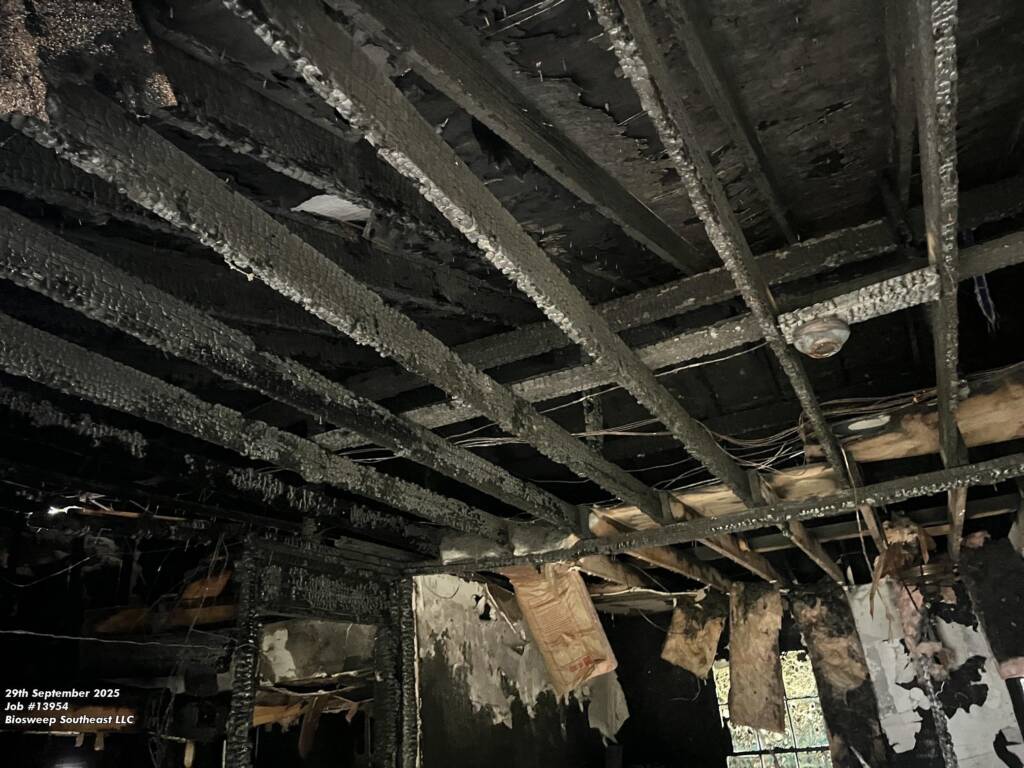
| Primary (direct) | Flames and extreme heat | Structural charring, burned materials, melted wiring, heat-cracked windows, warped framing |
| Secondary (indirect) | Firefighting water, smoke, soot, and suppression chemicals | Mold growth, corrosion, embedded odors, weakened building components, saturated insulation |
Within secondary damage, four types require specific professional attention:
Smoke and soot residue travel well beyond the fire zone. Soot is oily and acidic. It corrodes metal, stains surfaces, and continues damaging materials for days after the fire is out. Smoke particles embed in walls, upholstery, and HVAC ductwork. If your air handling system runs after a fire, it distributes smoke residue to every room it serves. Our guide on cleaning air ducts for mold covers the pattern of contamination inside duct systems.
Water damage from firefighting hoses and sprinkler systems creates the same moisture hazards as a burst pipe, with one added complexity: the water is often contaminated with fire suppressants and debris. Without prompt extraction and structural drying, this moisture creates conditions that support mold growth. For a complete picture of the water-damage process, see our water-damage services page.
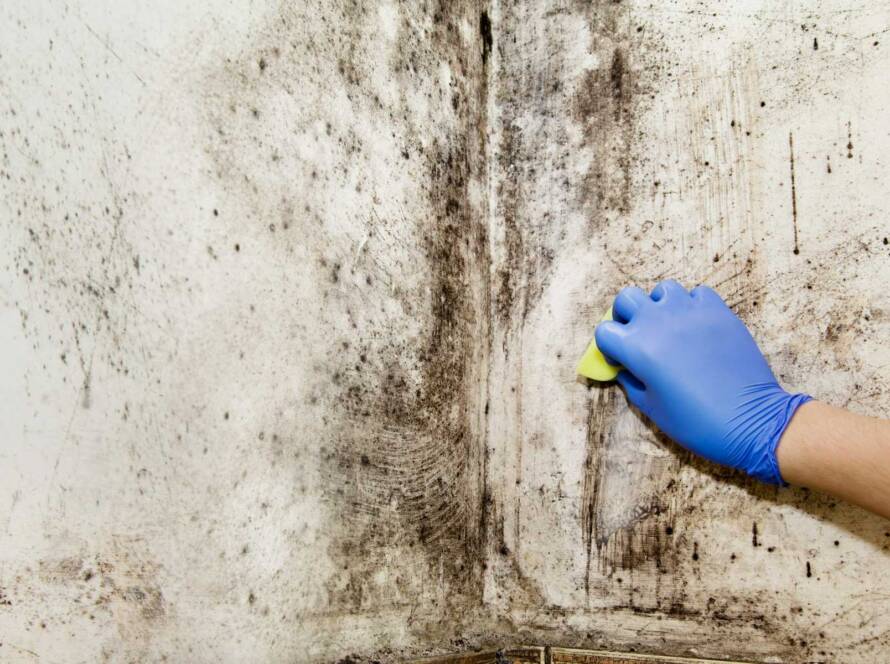
Mold risk after a fire is significant and often underestimated. The combination of firefighting water, elevated post-fire temperatures, and organic materials creates near-ideal mold conditions. Correcting the moisture source is always the first step. Without it, mold returns regardless of surface treatment. Our mold removal service addresses post-fire mold growth as part of the overall restoration scope.
Odor and air quality degradation persist long after visible damage is cleaned. Smoke particles penetrate porous materials, including drywall, insulation, upholstery, and clothing. Surface cleaning alone does not resolve this. For an objective post-fire air quality baseline, professional air quality testing provides documented results that guide both restoration decisions and insurance claims.
What Are the Health Risks of Fire Damage?
Fire damage introduces four categories of health risk: respiratory irritants from soot and smoke, structural instability from heat-weakened materials, mold and microbial growth from firefighting water, and hazardous materials exposure in older properties. These hazards persist in the air and on surfaces long after the fire is out.
- Respiratory irritants. Soot and smoke contain formaldehyde, benzene, acrolein, and carbon monoxide. These particles remain airborne and settle into porous surfaces, where continued off-gassing can irritate the respiratory system for days or weeks.
- Structural instability. Burned structural members, melted wiring, and heat-weakened floors pose safety hazards during re-entry and cleanup. Do not enter a fire-affected structure until it has been cleared for occupancy by the appropriate authority.
- Mold and microbial growth. Firefighting water creates moist conditions that support the rapid establishment of mold. Mold in fire-damaged structures often develops in wall cavities and under flooring before becoming visible at the surface.
- Hazardous materials exposure. Older Lowcountry properties may contain asbestos insulation or lead-based paint that can become airborne during fire and cleanup activities. Our lead abatement service addresses this where it is present.
Those at greatest risk include young children, elderly adults, pregnant women, and anyone with a pre-existing respiratory condition. For these individuals, professional clearance testing before re-occupancy is the appropriate standard, not an overreaction.
Source: U.S. Environmental Protection Agency
How Quickly Does Fire Damage Worsen After the Fire Is Out?
Secondary damage accelerates rapidly once a fire is extinguished. Every hour between fire suppression and professional response reduces what can be saved and increases what must be replaced.
| Timeframe | What Happens |
| Within hours | Soot begins to corrode metals and stain porous surfaces. Smoke odor sets into walls, fabrics, and HVAC systems |
| Within 24 to 48 hours | Mold spore germination begins in areas affected by firefighting water. Acidic soot continues to degrade plastics and finishes |
| Within days | Metal fixtures and appliances show visible corrosion. Smoke residue discolors painted surfaces permanently if not treated |
| Within weeks | Embedded odors become significantly harder to eliminate. Structural materials continue absorbing contamination. Restoration costs rise |
According to the NFPA’s Home Structure Fires report, direct property damage from residential fires totaled $9.4 billion in 2024. Delayed professional response is a direct contributor, every hour between fire suppression and mitigation expands the scope of secondary damage that cannot be reversed.
This is the practical reason 24/7 emergency response matters. It is not a marketing claim. It is the difference between restoring what is there and replacing what could have been saved.
The report page link remains the same — NFPA updates it in place annually, so the citation stays current.
Sources:
What Happens During Professional Fire Damage Restoration?
Professional fire damage restoration follows eight defined steps, from emergency response through final insurance documentation. Each step must be completed before the next begins — starting repairs before structural drying is complete, for example, traps moisture inside finished walls.
Before the restoration crew arrives, these four steps protect your claim and your safety:
- Do not run your HVAC system. If the air handler runs after a fire, it pulls smoke residue through the ductwork and distributes it to every room it serves.
- Do not wipe soot with a dry cloth. Soot is oily and acidic. Dry wiping drives it deeper into porous surfaces, making professional removal harder.
- Document before touching anything. Photograph and video every affected area — walls, ceilings, floors, contents — before anything is moved or cleaned. This record is the foundation of your insurance claim.
- Call your insurance carrier before cleanup begins. Most policies require notification before remediation starts. Starting work without notification can complicate or reduce your claim.
The professional restoration sequence:
- 24/7 emergency response. A certified technician arrives to assess conditions, confirm structural safety, and begin the documentation record.
- Damage assessment and inspection. The full scope of fire, smoke, soot, and water damage is mapped, including thermal imaging for hidden moisture and moisture meter readings in structural materials.
- Board-up and tarping. Compromised windows, doors, and roof openings are secured against weather intrusion and unauthorized entry during restoration.
- Water extraction and structural drying. All firefighting water is extracted. Commercial dehumidifiers and air movers dry structural materials to target moisture levels before any repair work begins.
- Smoke and soot removal. Soot is removed from surfaces using methods appropriate to each material type. HVAC systems are inspected and cleaned to prevent smoke residue from recirculating through the structure.
- BIOSWEEP® treatment. After physical cleaning and drying are complete, BIOSWEEP® multi-phase oxidation is applied to address odor compounds and microbial contamination.
- Structural repairs and reconstruction. Drywall, roofing, flooring, electrical systems, and plumbing are repaired or replaced in compliance with South Carolina contractor licensing requirements.
- Final inspection and insurance documentation. Clearance readings, photographic records, and written reports are compiled to support your insurance claim and confirm the restoration meets IICRC standards.
How Does BIOSWEEP® Technology Address Fire and Smoke Contamination?
BIOSWEEP® is a multi-phase oxidation system that uses hydrogen peroxide vapor, purified ozone, and hydroxyl radicals to break down smoke odor compounds and microbial contamination at the molecular level — eliminating what physical cleaning cannot reach on its own.
BIOSWEEP® is a multi-phase oxidation system that uses hydrogen peroxide vapor, purified ozone, and hydroxyl radicals to break down odor-causing molecules and biological contamination at the molecular level. The process leaves no harsh chemical residue and is non-toxic, safe for your family, your pets, and the environment.
In fire-damage contexts, BIOSWEEP® addresses smoke-odor compounds and microbial contamination that remain after soot removal and physical cleaning on non-porous surfaces. For porous materials such as heavily saturated drywall, insulation, and upholstery, physical removal or cleaning must precede chemical treatment. BIOSWEEP® is not a substitute for those steps. Every treatment begins only after physical restoration is complete.
BioSweep Southeast backs every odor elimination treatment with a clear commitment: if the smell returns, so do we, at no additional charge.
What Happens to Your Personal Property After a Fire?
Belongings do not always have to be discarded. What is recoverable depends on the type of damage, the material, and the speed of professional assessment.
| Item Type | What to Expect |
| Clothing and soft goods (smoke only) | Professional laundering and deodorization can often restore these if addressed quickly |
| Electronics | Do not power on any electronics that have been exposed to smoke or water. A professional assessment is required before any attempt to power on |
| Furniture (solid wood, limited exposure) | Cleaning and deodorization may be sufficient if soot contact was brief |
| Upholstered furniture (heavy smoke or water) | Typically requires professional evaluation; heavily contaminated pieces may need disposal |
| Documents and photographs | Freeze in sealed plastic bags immediately if professional recovery is unavailable. Freeze-drying by a qualified conservator can restore water-damaged paper materials |
| Hard non-porous items | Dishes, glassware, sealed metals, and hard plastics can typically be cleaned and deodorized |
Before anything is discarded, photograph and inventory every affected item with a description, approximate value, and condition. This inventory is the foundation of your personal property insurance claim.
Does Insurance Cover Fire Damage Restoration?
Most standard homeowners and commercial property policies cover fire damage. The details determine what actually gets paid.
What is typically covered:
- Fire and smoke damage to the structure and contents
- Water damage from firefighting efforts
- Debris removal
- Temporary living expenses during restoration (residential policies)
What may not be covered:
- Damage from deferred maintenance or pre-existing conditions
- Certain content categories without scheduled coverage riders
- Secondary damage developed because the professional response was delayed
Documentation tips:
- Take photos and video of every affected area before anything is moved or cleaned
- Save all receipts for temporary accommodations, meals, and emergency purchases
- Report the loss to your carrier as quickly as possible
- Work with a certified restoration company that generates IICRC-standard documentation throughout the process
Coverage decisions are made by your carrier based on policy language, not by the restoration company. What BioSweep Southeast provides is thorough, verifiable documentation from first inspection through final clearance, giving you the strongest possible claim foundation.
How Much Does Fire Damage Restoration Cost in Charleston?
Cost varies based on the type of damage, the scope, and how quickly response begins.
| Damage Level | Description | Estimated Range |
| Minor | Smoke and soot on surfaces, limited structural involvement, single room | $2,500 to $7,500 |
| Moderate | Multiple rooms, some structural damage, water extraction required | $8,000 to $25,000 |
| Major | Structural reconstruction, contents loss, extended drying, full deodorization | $30,000 to $100,000+ |
These ranges cover restoration only. If mold remediation is required following firefighting water exposure, that is typically a separate cost.
The most reliable way to understand your specific situation is a free on-site assessment with a written estimate. BioSweep Southeast provides both at no charge.
Commercial Fire Damage Restoration
The restoration process is the same in any building. The priorities and logistics differ significantly for commercial properties.
Business continuity is almost always the primary concern. Every additional day of closure is a direct cost: lost revenue, displaced staff, and lease obligations that continue regardless of operations. Commercial fire restoration typically requires:
- Phased work to allow partial operations to continue where safe
- After-hours scheduling to limit business interruption
- Coordination across HVAC, electrical, and mechanical systems
- Code-compliant reconstruction documented for commercial insurance carriers
- Detailed written reporting for multiple stakeholders
BioSweep Southeast serves retail spaces, multifamily properties, office buildings, and industrial facilities across Charleston and the surrounding Lowcountry. Visit our fire damage service page for full commercial capabilities.
How Do You Choose the Right Fire Damage Restoration Company?
The consequences of the wrong choice typically do not appear immediately. They show up weeks later when odors return, mold surfaces behind a repaired wall, or an insurance claim is disputed because documentation was incomplete.
What to look for:
- IICRC certification. The IICRC is the industry’s standard-setting body for fire, smoke, and water damage restoration. Certification requires demonstrated competence, adherence to published standards, and ongoing education. It is publicly verifiable at iicrc.org.
- 24-hour emergency availability. Response time is directly tied to what can be saved. A company that cannot dispatch within two to four hours is not positioned to limit secondary damage.
- Written estimates before work begins. A reputable company assesses the damage, explains what is needed and why, and documents the full scope before requesting authorization to proceed.
- End-to-end capability. Water extraction, soot removal, BIOSWEEP® deodorization, structural repair, and insurance documentation handled under one roof reduces the risk of scope gaps between contractors.
- An odor guarantee with teeth. Surface cleaning does not resolve embedded smoke odor. Ask specifically what technology is used and whether the company stands behind the result. BioSweep Southeast does: if the smell returns, so do we.
Frequently Asked Questions About Fire Damage Restoration
How long does fire damage restoration take?
Timeline depends on the scope of damage. Minor smoke cleanup can be completed in a few days. Structural reconstruction following a major fire can take several weeks. A professional assessment is the only way to provide an accurate timeline for your specific situation.
Can smoke-damaged belongings be saved?
Many items can be restored if professional assessment begins quickly. Clothing, hard non-porous items, and solid wood furniture have strong recovery odds when addressed promptly. Heavily smoke- or water-saturated upholstery and particleboard typically cannot be fully decontaminated.
What is the difference between smoke cleaning and odor removal?
Smoke cleaning removes visible soot and residue from surfaces. Odor removal addresses the microscopic smoke compounds that have embedded in the air and on surfaces throughout the structure. BIOSWEEP® multi-phase oxidation eliminates those compounds at the molecular level on non-porous surfaces after physical cleaning is complete.
Do I need to leave my home during fire restoration?
Whether you can remain in your home during fire restoration depends on three factors: structural clearance, air quality readings, and which phase of work is active. In most cases involving more than minor smoke damage, temporary relocation is required for at least part of the process.
Relocation is required when:
- The structure has not been cleared for occupancy by the appropriate authority
- Air quality testing shows airborne soot, particulates, or chemical concentrations above safe thresholds
- Demolition or reconstruction work is active in occupied areas
- BIOSWEEP® treatment is being applied — the property must be vacated during treatment and until clearance readings confirm it is safe to re-enter
You may be able to stay when:
- Damage is limited to a single room or area that can be fully isolated
- Structural clearance has been issued
- Air quality baseline readings are within acceptable limits in the unaffected portions of the home
A practical note on insurance: Most standard homeowners policies include Additional Living Expenses (ALE) coverage, which pays for temporary housing, meals, and related costs when your home is uninhabitable due to a covered loss. If your restoration team or the appropriate authority advises relocation, document that recommendation in writing — it supports your ALE claim with the carrier.
Your restoration team will advise you on which phases require vacating and for how long. If you are uncertain whether your situation qualifies for ALE coverage, ask your carrier before making any housing arrangements.
Will mold grow after a fire?
Yes, if firefighting water is not extracted and dried promptly. Structural drying is a standard part of professional fire restoration. If mold is already present when work begins, our mold removal service addresses it as part of the overall scope.
Contact BioSweep Southeast for Fire Damage Restoration
Fire damage is serious. It is also manageable when the response is fast, thorough, and handled by certified professionals who understand the full scope of what a fire leaves behind.
BioSweep Southeast provides complete fire damage restoration across Charleston and the surrounding Lowcountry: emergency response, structural drying, soot and smoke removal, BIOSWEEP® deodorization, and full reconstruction. Our team is IICRC-certified, locally based, and available 24/7.
Contact BioSweep Southeast today.
We don’t mask the problem. We eliminate it.