
Updated April 2026
You noticed something: a musty smell that wasn’t there last month, a dark stain spreading from the corner of the ceiling, or a persistent cough that clears up when you leave the house. You’re not overreacting. In Charleston’s Lowcountry, where humidity rarely drops below 70% and summer storms can push water into walls, crawlspaces, and HVAC systems in hours, mold doesn’t wait.
This guide covers everything you need to know: what mold is, how it grows, which types are most common in South Carolina homes, when you can handle it yourself and when you can’t, what professional remediation actually involves, what it costs, and how to keep it from coming back.
Why Is Mold a Persistent Problem in Charleston?
Mold is a persistent problem in Charleston due to consistently high humidity, frequent moisture intrusion from storms, and building conditions that trap moisture.
What Mold Needs to Grow
Mold requires three things to grow:
1. Moisture (Primary Trigger)
Moisture is the most important factor. Without it, mold cannot grow.
Common sources include:
- Roof leaks
- Plumbing failures
- Flooding or storm intrusion
- Condensation on pipes or HVAC systems
- High indoor humidity above 60%
2. Organic Material (Food Source)
Mold feeds on materials commonly found in buildings:
- Drywall paper
- Wood framing
- Insulation
- Carpet backing
- Ceiling tiles
These materials are present in nearly every structure, which makes mold growth easy once moisture is introduced.
3. Time (Growth Window)
Under typical Charleston conditions, mold can begin establishing itself quickly once moisture is present. Warm temperatures and high humidity accelerate growth, especially during summer months.
Key takeaway:
If moisture is not addressed quickly, mold growth is expected, not accidental.
Why Charleston’s Climate Creates Ideal Conditions
The South Carolina coast is one of the most mold-hospitable environments in the country. Average relative humidity in Charleston exceeds 75% for much of the year. After a hurricane, tropical storm, or even a heavy afternoon thunderstorm, moisture finds its way into wall cavities, crawlspaces, subfloors, and attics before a homeowner notices anything wrong.
Older Lowcountry homes, many built on pier foundations or with unencapsulated crawlspaces, are especially vulnerable. Saltwater air accelerates the degradation of building materials, making it easier for mold to take hold. And HVAC systems that cycle humid air through ductwork without proper maintenance become distribution networks for mold spores throughout the home.
Moisture control is not optional here. It is the foundation of every effective mold strategy.
What Are Common Types of Mold Found in Charleston Homes?
Professional mold assessment identifies the type of mold present through air sampling and surface testing. Here are the types most commonly found in Lowcountry homes.
Quick Comparison of Common Mold Types in Charleston Homes
| Mold Type | Typical Color | Common Locations | Growth Conditions | Primary Concerns |
| Cladosporium | Olive green, brown, or black | Fabrics, wood, carpets, HVAC ducts | Can grow in both warm and cooler conditions | Strong allergen; triggers asthma and respiratory irritation |
| Aspergillus | Yellow, green, white, or black | Dust, insulation, air systems, stored materials | Thrives in dry to moderately damp environments | Can cause respiratory infections, especially in immunocompromised individuals |
| Penicillium | Blue-green or blue-gray | Water-damage drywall, carpet, insulation, inside walls | Rapid growth in damp, hidden areas | Spreads quickly; often indicates hidden moisture problems |
| Alternaria | Dark gray, brown, or black with a fuzzy texture | Bathrooms, window frames, under sinks, showers | High humidity and poor ventilation | One of the most common allergy triggers, linked to asthma flare-ups |
| Stachybotrys chartarum | Dark greenish-black | Drywall, ceiling tiles, and fiberboard after prolonged saturation | Requires constant moisture over time (7+ days) | Indicates severe water damage; may produce mycotoxins |
Why Professional Identification Matters
No mold species should be identified or dismissed based on visual inspection alone. The only way to determine what you’re dealing with is professional air sampling and surface testing. A certified assessor collects samples, sends them to an accredited laboratory, and interprets the results against baseline outdoor conditions. That process gives you a defensible answer, not a guess.
What Mold Exposure Does to Your Health
Mold exposure can cause respiratory issues, allergic reactions, skin irritation, and other symptoms, especially in individuals with sensitivities or underlying health conditions.
Symptoms to Watch For
Mold exposure affects people differently depending on the species, concentration, duration of exposure, and individual sensitivity. Common symptoms include:
- Nasal and sinus congestion, runny nose, sneezing
- Eye irritation — redness, burning, watering
- Respiratory symptoms — cough, wheeze, shortness of breath
- Skin irritation — rash or itching following contact
- Throat irritation and persistent hoarseness
- Headache and fatigue, particularly if symptoms improve when away from the property
Who Faces the Highest Risk
Certain groups are significantly more vulnerable to health effects from mold exposure:
- Children, whose immune and respiratory systems are still developing
- Elderly adults, who often have a reduced immune response
- People with asthma or allergic rhinitis, for whom mold is a documented trigger
- Immunocompromised individuals — those undergoing chemotherapy, organ transplant recipients, or people living with HIV
- Anyone with chronic lung disease, including COPD
The CDC recommends that individuals in these groups not participate in mold cleanup at all — not even as bystanders.
When Indoor Air Quality Testing Makes Sense
If symptoms persist without a clear source, or if you’ve had water damage and want to confirm whether mold has affected your air, professional testing gives you a data-backed answer. Learn more about what that process entails and what it costs: Indoor Air Quality Testing Cost in Charleston, SC.
How Can You Tell if You Have a Mold Problem?
You can tell you have a mold problem by identifying visible growth, musty odors, moisture damage, or worsening indoor symptoms.
Visible Warning Signs
Mold growth is often visible before it becomes a serious structural problem if you know what to look for. Common signs include:
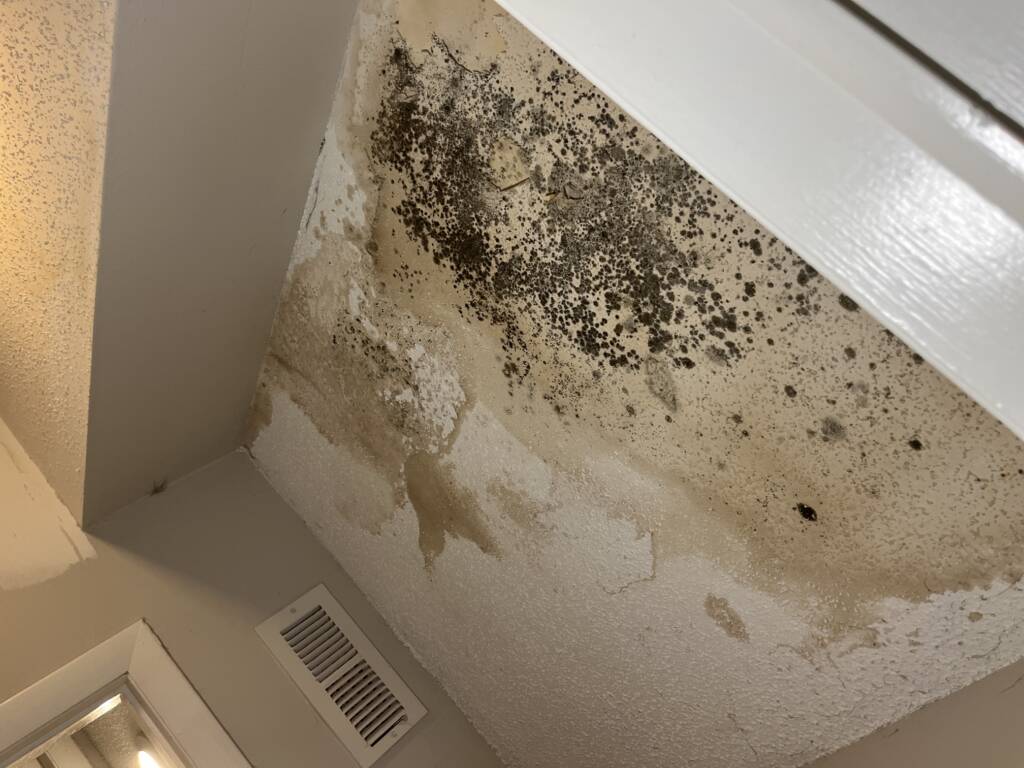
- Discoloration on walls, ceilings, or floors — green, black, brown, white, or gray
- Paint bubbling or peeling away from the drywall — often a sign of moisture behind the surface
- Warped or stained wood on window frames, door frames, or baseboards
- Rust stains or streaking on metal fixtures in damp areas
- Visible fuzzy growth on grout, caulk, or any porous surface that stays wet
Visible mold on a surface is rarely the full extent of the problem. By the time growth appears on drywall, there is typically established growth inside the wall cavity behind it.
Hidden Mold Where It Hides in Lowcountry Homes
Mold grows wherever moisture accumulates, and in coastal South Carolina, that is often in places you don’t look regularly:
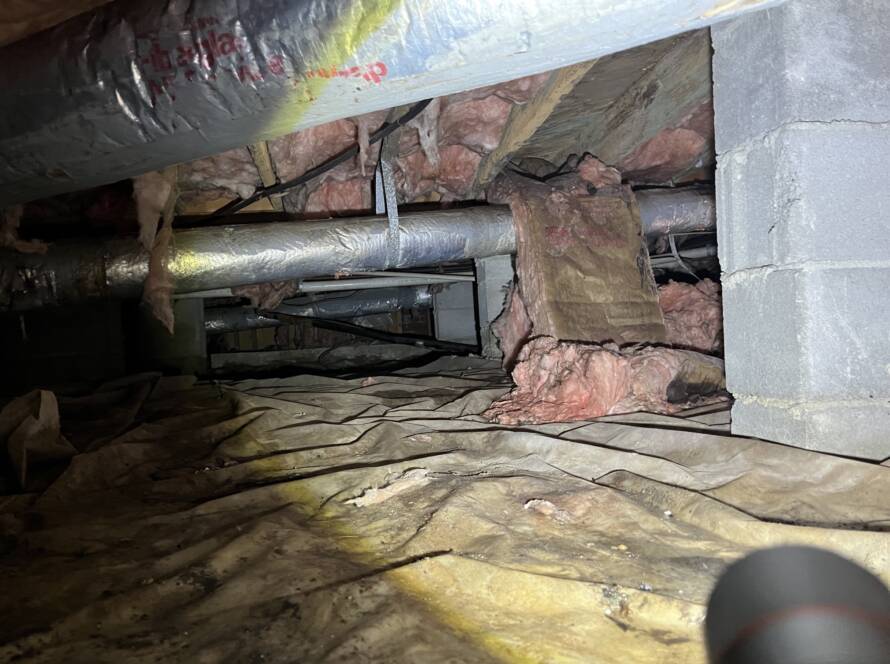
- Crawlspaces — exposed soil, poor ventilation, and proximity to groundwater make these the most common mold location in older Lowcountry homes
- Wall cavities — slow plumbing leaks or condensation on cold water pipes can sustain growth for months without visible symptoms
- Subfloors — particularly around toilet flanges, under dishwashers, and adjacent to exterior walls
- Attic sheathing — inadequate roof ventilation drives moisture into the attic, where mold develops on the underside of the sheathing
- Behind cabinets — under-sink areas with slow drips are a classic hidden location
- Inside HVAC ducts — one of the few locations where mold growth actively distributes spores through the home
Mold on Specific Surfaces
Some surfaces present unique challenges for detection and remediation. Textured ceilings require a different approach than smooth drywall, and carpet contaminated by water damage can harbor active growth beneath a dry surface.
The Smell Test — What Mold Smells Like
The characteristic musty odor associated with mold is caused by microbial volatile organic compounds (MVOCs) gases produced as mold metabolizes organic material. The smell is often the first indicator of hidden mold, appearing before any visible growth. If a room smells musty and you can’t find a source, assume there is one and investigate, especially after any water event.
A smell that clears up when windows are open but returns when the HVAC runs is a strong indicator of contamination inside the duct system.
Can You Remove Mold Yourself or Do You Need a Professional?
Small, surface-level mold can sometimes be handled by homeowners, but most mold problems require professional remediation to ensure complete removal and prevent recurrence.
What the EPA Recommends
The EPA provides clear guidance on when homeowners can manage mold themselves and when they should not:
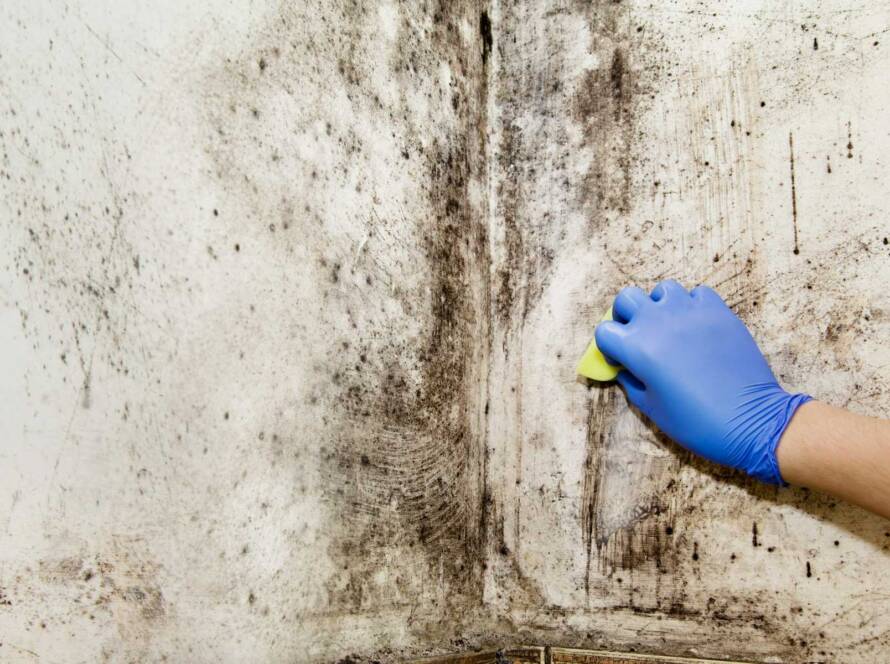
Mold covering less than 10 square feet (roughly a 3×3 foot area) on a non-porous surface can typically be cleaned by a healthy adult using appropriate PPE N-95 respirator, gloves, and eye protection. Hard, non-porous surfaces such as tile, glass, and sealed concrete can be scrubbed with detergent and water, then dried thoroughly.
Mold covering more than 10 square feet should be assessed and remediated by a certified professional. The same guidance applies to any mold in HVAC systems, inside wall cavities, on structural materials, or in situations involving a household member who is immunocompromised, asthmatic, or otherwise at elevated risk.
Source: EPA — Mold Cleanup in Your Home
When Professional Remediation Is Required
Beyond the size threshold, there are situations where professional involvement is not optional:
- Mold inside the HVAC system — attempting DIY cleanup can aerosolize spores throughout the entire home
- Mold on structural materials — drywall, wood framing, subfloor — which requires physical removal, not surface cleaning
- Any mold following flooding or significant water intrusion, where the full extent of contamination is unknown
- Mold in a home with vulnerable occupants — the health risk of exposure during cleanup can exceed the risk of the mold itself
- Mold with an unknown or unresolved moisture source — cleaning without finding and fixing the source guarantees recurrence
Why Surface Cleaning Alone Doesn’t Work
This is the most important distinction between DIY approaches and professional remediation. Bleach, antimicrobial sprays, and surface scrubbing address what you can see they do not address mold that has penetrated a porous material.
Drywall, wood, insulation, and carpet backing are porous. Once mold colonizes these materials, its root structures (hyphae) grow into the substrate. Surface treatment leaves those hyphae intact. Within days or weeks, growth returns, and it often returns more aggressively because moisture conditions haven’t changed.
The IICRC S520 Standard for Professional Mold Remediation (4th Edition, 2024) — the governing industry benchmark — specifies source removal as the primary remediation method for affected porous materials. That means physical removal and disposal, not cleaning-in-place.
Source: IICRC S520 Standard for Professional Mold Remediation
What is the Professional Mold Remediation Process
Professional mold remediation is not a single treatment it is a structured process that addresses the contamination, the conditions that caused it, and the verification that the work was successful. Here is what that process looks like when performed to IICRC S520 standards.
Step 1: Free On-Site Assessment and Moisture Mapping
The process begins with a thorough inspection of the affected areas and surrounding areas. A certified technician identifies visible mold, uses moisture meters and thermal imaging to locate hidden moisture, and maps the full extent of the affected zone. The assessment produces a written scope of work before any remediation begins.
Step 2: Containment Setup
Before any physical work begins, the affected area is sealed off using polyethylene barriers and negative air pressure. This prevents mold spores from traveling to unaffected parts of the home during remediation. HVAC vents within the containment zone are sealed to prevent cross-contamination through the duct system.
Step 3: HEPA Air Filtration
HEPA air scrubbers run continuously throughout the remediation process, filtering particles as small as 0.3 microns — including mold spores — from the air inside the containment zone. This protects technicians and reduces ambient spore counts before, during, and after removal.
Step 4: Physical Mold Removal per IICRC S520
Physical removal is the non-negotiable first step. Porous materials that cannot be restored — contaminated drywall sections, insulation, subfloor panels, ceiling tiles — are removed, double-bagged, and disposed of per protocol. This is what separates professional remediation from surface treatment: the mold and the material it has colonized are removed together.
Step 5: BIOSWEEP® Multi-Phase Oxidation Treatment
After physical removal, BIOSWEEP® — BioSweep Southeast’s proprietary five-phase oxidation system — is deployed to decontaminate the remaining structure. The system generates hydroxyl radicals, purified ozone, UVC radiation, and hydrogen peroxide vapor to destroy residual mold at the molecular level on non-porous surfaces. The process leaves no chemical residue and is safe for the home environment once treatment is complete.
BIOSWEEP® technology achieves a ≥3.2-log reduction (99.9%+) against Stachybotrys chartarum spores on non-porous surfaces, including glass, sealed concrete, stainless steel, and sealed laminate. For porous substrates, physical removal remains the primary method — BIOSWEEP® is the decontamination layer that follows.
Step 6: Structural Drying and Moisture Source Correction
The moisture source that caused the growth is identified and corrected, whether that means repairing a roof leak, fixing a plumbing failure, improving crawlspace drainage, or recommending an HVAC repair. Then, industrial drying equipment brings structural materials to an acceptable moisture content before any restoration work begins.
This step is what determines whether mold returns. Remediation without moisture correction is temporary. If the conditions that fed the growth remain, the growth will return.
Step 7: Post-Remediation Clearance Testing
After remediation is complete, air sampling and surface testing confirm that indoor mold levels have returned to or below outdoor baseline conditions. A third-party accredited laboratory analyzes the samples. That result, not a visual check or smell test, is the standard by which successful remediation is confirmed
Step 8: Restoration
Once clearance is confirmed, the structural work begins: new drywall, subfloor panels, insulation, paint, and any finish work required to return the space to its pre-loss condition. BioSweep Southeast handles restoration as part of the same engagement — no handoff to a second contractor, no accountability gap.
How Long Does Remediation Take?
The timeline varies by the scope of contamination and the extent of structural damage. For commercial properties and larger residential projects, see: Mold Remediation Timeline: How Long It Takes and What Commercial Property Owners Should Expect.
For most residential remediation jobs in the Lowcountry, the active remediation phase runs 1–5 days, with drying and restoration adding additional time depending on the scope.
How Are Water Damage and Mold Connected?
Water damage and mold are directly connected because mold begins to grow shortly after moisture is introduced and not properly removed.
The 24–48 Hour Window
Water damage and mold are not separate problems — they are sequential stages of the same event. Once water reaches a porous building material, the clock starts. Within 24 to 48 hours under typical Lowcountry temperature and humidity conditions, mold colonization can begin. That window shortens in warmer months.
This is why the response to water damage matters as much as the response to mold itself. A fast, thorough drying response significantly reduces mold risk. A slow or incomplete one almost guarantees it.
Mold in Flooring After Water Damage
Water-saturated flooring — whether carpet, hardwood, laminate, or vinyl over a subfloor — creates direct conditions for mold growth beneath the surface. The finished floor may look and feel dry within days of a water event, while the subfloor below remains saturated. By the time mold becomes visible or detectable by smell, the subfloor may require full replacement.
For guidance on assessing subfloor damage and what replacement involves: When to Replace a Water-Damaged Subfloor
For carpet specifically — where mold growth in the backing and padding is common after even moderate water exposure — see: Mold in Carpet from Water Damage: What Homeowners in South Carolina Need to Know
Mold in Cabinetry and Built-Ins
Kitchen and bathroom cabinetry present a specific challenge: the cabinet box conceals the wall behind it. A slow leak under a sink or from a dishwasher supply line can saturate the cabinet floor, the wall behind it, and the adjacent drywall over months before it becomes apparent. By the time the door hinges rust or the cabinet floor buckles, the mold problem typically extends well beyond the cabinet itself.
Insurance Documentation for Water Damage and Mold
Most homeowner’s insurance policies cover water damage from sudden, accidental events, such as burst pipes, appliance failures, and storm-driven water intrusion. Mold that results directly from a covered water event is often included. Coverage for mold from long-term leaks or deferred maintenance is typically excluded.
Can Mold Grow in HVAC Systems?
Your HVAC system is the one place where mold growth doesn’t just affect a single room — it actively distributes spores throughout every space the system serves. A contaminated air handler or return duct can continuously re-seed remediated areas, undercut air quality improvements, and create symptoms that seem impossible to trace.
Why Duct Mold Spreads Through the Whole Home
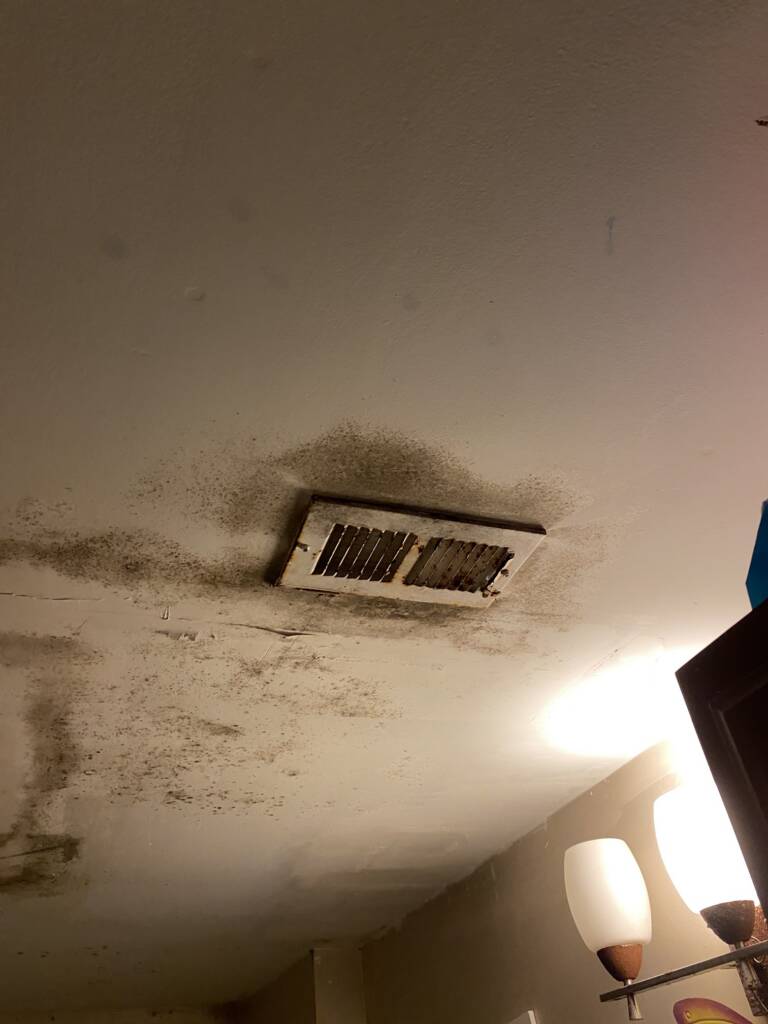
The same airflow that keeps your home comfortable in a Charleston summer becomes a conduit for mold when it’s present in the ductwork. Spores from a contaminated section of duct travel to every supply register in the home. In a system that runs multiple cycles per day, which is standard during South Carolina summers, that means continuous low-level exposure throughout the living space.
If you’ve had mold remediation in a specific room but symptoms persist, or if musty odors return when the HVAC runs, the duct system warrants investigation: Cleaning Air Ducts for Mold: What You Need to Know
Seasonal and Vacancy Maintenance
Vacation properties and homes left unoccupied for extended periods are particularly vulnerable. When an HVAC system sits idle in summer humidity or runs without anyone monitoring for leaks, drain pan overflows, or filter failures, conditions for mold growth can develop quickly. A seasonal maintenance plan significantly reduces that risk.
How Much Does Mold Remediation Cost in South Carolina?
Most residential mold remediation in South Carolina costs between $500 and $6,000, with the final number driven by scope, not a standard rate card.
What Affects the Final Cost
| Factor | Lower End | Higher End |
| Affected area | Single surface, small room | Multiple rooms, structural materials |
| Material type | Non-porous surfaces only | Drywall, subfloor, wood framing requiring removal |
| Moisture source | Already repaired | Requires plumbing or roofing work |
| HVAC involvement | Not affected | Full duct cleaning required |
| Clearance testing | Single-room sample | Full property air and surface sampling |
| Restoration scope | Minimal finish work | Full drywall, insulation, and finish replacement |
Jobs that appear small with a visible patch of mold on a bathroom ceiling can expand significantly once containment reveals the extent of growth behind the surface. This is not a contractor upsell tactic; it is the nature of mold in porous building assemblies. A thorough assessment before work begins is what prevents scope surprises.
What’s Included in BioSweep SE’s Assessment
The assessment is free, on-site, and produces a written estimate before any work begins. There is no obligation. The estimate details the affected areas, the proposed remediation scope, the materials involved, and the projected timeline. You know exactly what you’re committing to before work starts.
Does Homeowner’s Insurance Cover Mold Remediation?
Coverage depends entirely on your specific policy and the origin of the mold. Mold resulting from a sudden, covered water event — a burst pipe, appliance flood, or storm intrusion — is often covered when addressed promptly. Mold from long-term moisture problems, deferred maintenance, or high humidity is typically excluded.
BioSweep Southeast provides the full documentation package your carrier needs: initial assessment findings, remediation scope and process records, and post-remediation clearance test results. We can’t tell you what your policy will cover—but we make sure you have everything you need to submit a complete, well-documented claim.
How Can You Prevent Mold from Coming Back?
Mold remediation removes what is there. Moisture control determines whether it returns. These are two separate outcomes — and only one of them is within BioSweep SE’s control. The other depends on ongoing maintenance and the physical condition of your home.
Fix the Moisture Source First
Before any other prevention strategy, the source needs to be identified and corrected — whether that is a roof leak, a plumbing failure, a grading issue directing water toward the foundation, or an HVAC condensate line that has been draining incorrectly.
Humidity Control in Charleston Homes
The target indoor relative humidity for mold prevention is 30–50%. In a Charleston summer, achieving that without mechanical assistance is not realistic. A properly sized whole-home dehumidifier or well-maintained portable unit in high-risk areas is one of the most effective long-term mold-prevention investments a Lowcountry homeowner can make.
Monitor humidity in moisture-prone areas with an inexpensive hygrometer: crawlspaces, basements, utility rooms, and any space that has had previous water problems.
Crawlspace and Foundation Sealing
Unencapsulated crawlspaces in South Carolina homes draw moisture directly from the soil below, creating a reservoir of humidity beneath the living space. Crawlspace encapsulation, sealing the ground with a thick vapor barrier, insulating the walls, and controlling humidity inside the space is one of the highest-impact structural improvements a Lowcountry homeowner can make for long-term mold prevention.
Sealed foundation vents and a properly maintained sump or drainage system in the crawlspace complete that system.
Ventilation and Airflow
Stagnant air is mold’s ally. Bathrooms should exhaust directly to the exterior, not into the attic. Kitchen range hoods should vent outside, not recirculate. Attic spaces require continuous soffit and ridge ventilation to prevent moisture accumulation in the roof sheathing.
Areas that feel stuffy or have visible condensation on windows or pipes indicate that airflow and humidity management are inadequate. Address both.
Annual Inspection Cadence
Given Charleston’s storm frequency and humidity levels, a yearly walkthrough of crawlspaces, attics, and HVAC systems, ideally before hurricane season, is practical risk management. You’re looking for new moisture staining, any deterioration of existing vapor barriers or insulation, and early signs of growth before they become remediation projects.
Post-Remediation — What Happens After the Work Is Done?
After mold remediation is complete, the property is tested, documented, and verified to ensure mold levels are safe and the work was successful.
Clearance Testing and What It Confirms
Post-remediation clearance testing is the standard by which successful remediation is measured. After work is complete, an assessor collects air samples and surface samples from the remediated area, as well as reference samples from unaffected areas of the home and from outside.
A third-party-accredited laboratory analyzes the samples and compares indoor mold species and concentrations with outdoor baseline levels. A successful clearance means indoor levels are at or below outdoor conditions, which is the industry-accepted standard for a remediated environment.
This report is the documented proof that remediation was effective. It is also the document your insurance carrier, real estate agent, or property manager will ask for.
BioSweep Southeast’s Post-Remediation Support
BioSweep SE stands behind its work after the job is closed. Post-remediation support includes documentation of the full process — scope, methods, materials removed, and clearance test results.
One note on scope: the Odor-Free Guarantee “if the smell returns, so do we” applies specifically to odor removal treatments. Mold recurrence after remediation depends on whether moisture conditions return, which is outside BioSweep SE’s control once the work is complete and the moisture source has been corrected. What is in our control is the quality and thoroughness of the remediation itself — and that is what we stand behind.
Documentation Provided
Every completed remediation project produces a documentation package that includes:
- Initial assessment findings and moisture mapping
- Scope of work performed, materials removed, and methods used
- BIOSWEEP® treatment records
- Post-remediation clearance test results from an accredited laboratory
- Written records for insurance, real estate disclosure, or property management purposes
Frequently Asked Questions About Mold Remediation in Charleston, SC
What is the difference between mold removal and mold remediation?
Mold removal typically refers to cleaning visible mold from surfaces. Mold remediation is the full professional process — assessment, containment, physical removal of affected materials, treatment, moisture correction, clearance testing, and restoration. Remediation addresses the problem; removal addresses the symptom.
How long does professional mold remediation take?
Most residential remediation jobs take 1–5 days for the active remediation phase. Structural drying adds time, and restoration work follows after clearance testing confirms success. Larger or more complex jobs — particularly commercial properties — take longer.
Can I stay in my home during mold remediation?
It depends on the location and extent of the contamination. For small, well-contained jobs in an isolated area, remaining in the home is often possible. For large-scale remediation, jobs involving HVAC systems, or households with vulnerable members, temporary relocation during the active remediation phase is typically recommended. Your BioSweep SE technician will advise based on the specific scope.
How do I know the mold is actually gone?
Post-remediation clearance testing by an accredited third-party laboratory is the only reliable answer. Air samples and surface samples from the remediated area are compared against outdoor baseline levels. When indoor levels are at or below outdoor conditions, remediation is confirmed successful — not before.
Is BIOSWEEP® safe for children and pets?
Yes. The BIOSWEEP® system generates no toxic chemical residue. The active treatment phase requires the space to be unoccupied, but once treatment is complete and the area is ventilated, the environment is safe for children, pets, and household members. No harsh chemicals, no residue, no off-gassing after treatment.
Does BioSweep Southeast offer mold testing?
BioSweep SE performs on-site assessments that include moisture mapping and visual inspection as part of the remediation process. For standalone air quality testing and detailed pre-remediation sampling, we can coordinate with third-party assessors.
What mold types are most common in Charleston, SC homes?
Cladosporium, Aspergillus, Penicillium, and Alternaria are the most frequently found in Lowcountry residential assessments. Stachybotrys chartarum (often called “black mold”) requires prolonged water saturation and is less common but found after significant water events. Professional lab testing is the only way to identify species accurately.
Does homeowner’s insurance cover mold remediation?
Coverage depends on your policy and the source of the mold. Mold from a sudden, covered water event is often included when addressed promptly. Mold from chronic moisture or maintenance issues is typically excluded. BioSweep SE provides full documentation to support your claim — the coverage decision is your carrier’s.
What is the IICRC S520 standard?
The IICRC S520 — published by the Institute of Inspection, Cleaning and Restoration Certification (IICRC) — is the industry standard for professional mold remediation. It defines contamination conditions, required procedures, safety protocols, and clearance criteria. BioSweep Southeast performs mold remediation in compliance with IICRC S520 (4th Edition, 2024).
Ready to Assess Your Property?
If you’ve found mold or noticed signs like musty odors or recurring symptoms, the next step is a professional on-site assessment.
Mold cannot be accurately diagnosed over the phone. A proper inspection includes:
- Visual assessment of affected areas
- Moisture mapping to locate hidden sources
- A clear scope of work and upfront pricing
BioSweep Southeast combines physical mold removal with BIOSWEEP® multi-phase oxidation treatment to address residual contamination at the molecular level on non-porous surfaces after physical remediation is complete.
The result is not just removal, but a more complete restoration of your indoor environment.
Schedule your on-site assessment today to get a clear, data-backed plan for your property.
BioSweep Southeast has served Charleston and the Lowcountry since 2009.