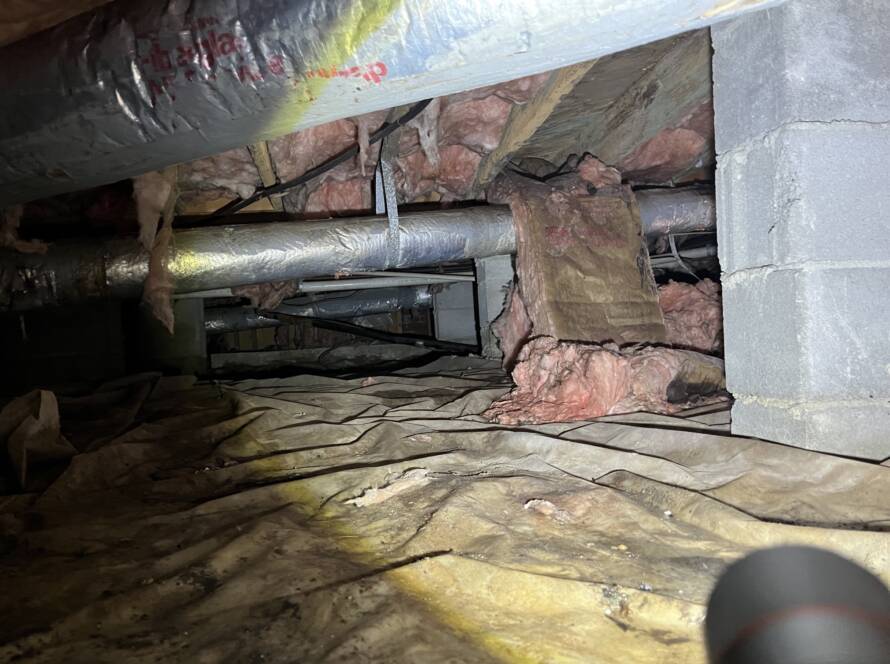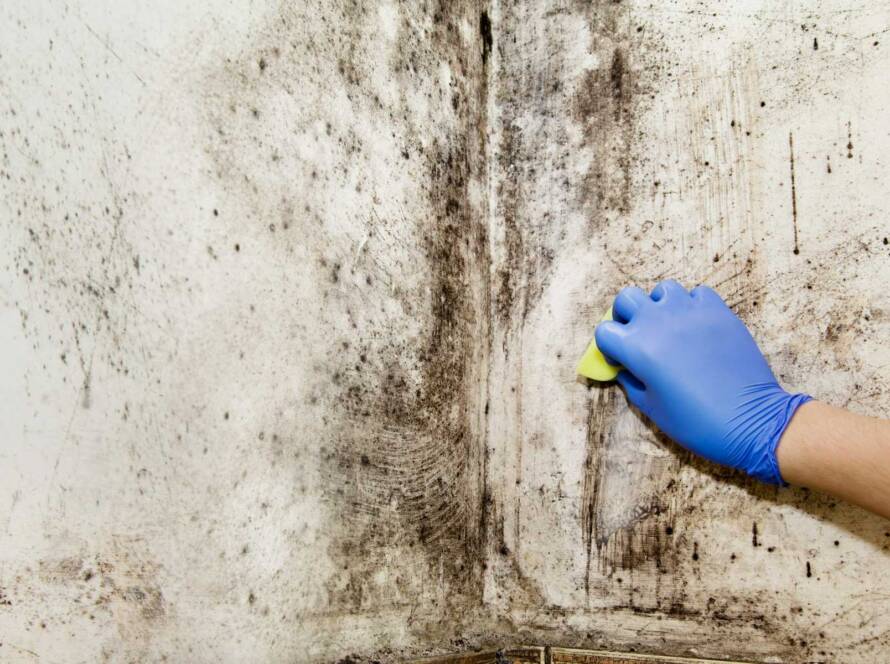

Mold can begin growing in carpet within 24 to 48 hours after water damage. In South Carolina’s humid and coastal climate, wet carpet padding and subflooring create ideal conditions for rapid mold growth. Carpet may be salvageable if dried within 24 to 48 hours and not contaminated. If it remains wet longer than 48 to 72 hours, or was exposed to sewage or floodwater, replacement is usually recommended.
If you are unsure what category of water affected your home, start with our guide on who to call for water damage.
How Fast Does Mold Grow in Carpet After Water Damage?
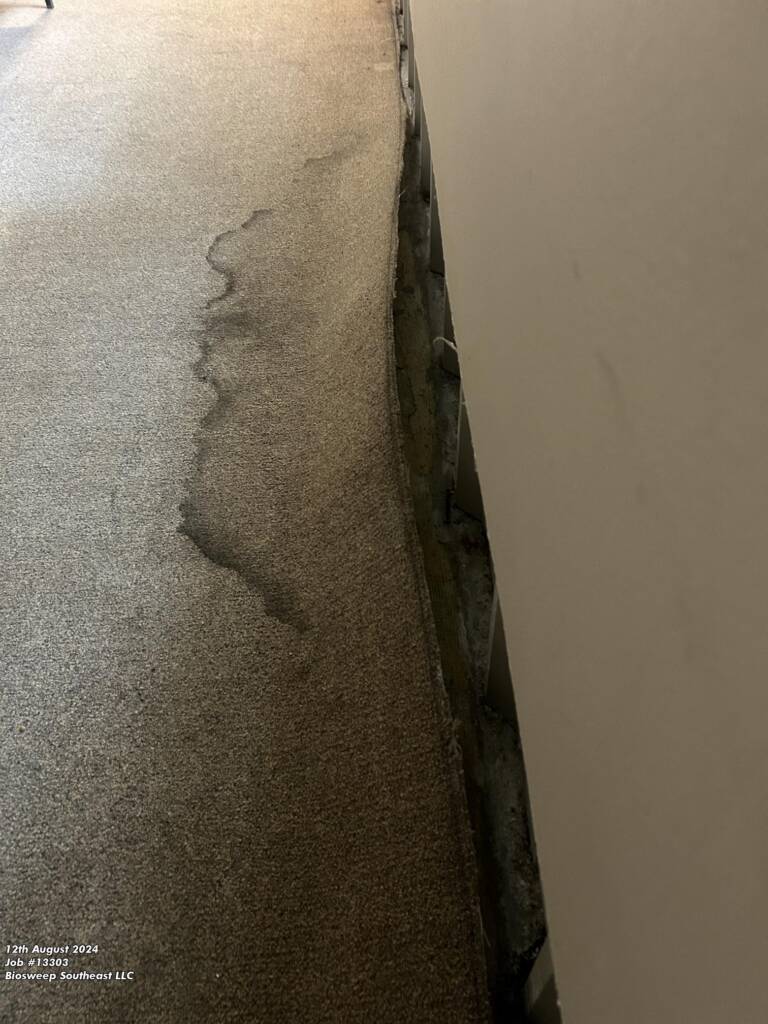
Mold can begin growing in carpet within 24 to 48 hours after water exposure, especially in humid environments like South Carolina.
Growth speed depends on:
- Indoor humidity levels
- Temperature
- Type of water involved
- How quickly drying begins
- Whether padding remains saturated
For a full breakdown of restoration timelines, see how long water damage restoration takes.
If mold has already developed, the remediation process often takes longer than homeowners expect. Acting quickly helps prevent further damage and reduces the scope of cleanup needed.
What Type of Water Damaged the Carpet?
Not all water damage is the same. The type of water involved plays a major role in whether carpet can be safely saved.
Water damage is typically classified into three categories:
Category 1: Clean water from a broken supply line or pipe. If dried quickly, carpet may be salvageable.
Category 2: Gray water from appliances, dishwashers, or washing machines. This water contains contaminants and increases health risk.
Category 3: Black water from sewage backups, storm flooding, or standing floodwater.
In South Carolina, hurricane-related flooding and heavy storm events often fall into Category 3 conditions.
If sewage or floodwater was involved, replacement is typically the safest option.
Why Is Carpet So Vulnerable to Mold After Water Damage?
Carpet is highly porous and layered, which allows moisture to become trapped below the surface.
Carpet supports mold growth because it:
- Holds water in the padding underneath
- Limits airflow at the subfloor level
- Traps dust and organic debris that mold feeds on
- Conceals hidden moisture even after the surface feels dry
If you notice structural changes like soft spots or warping, review signs of water damage under floor.
Can Mold on Carpet Make You Sick?
Yes. Mold in carpet can negatively affect indoor air quality and trigger health symptoms.
Common symptoms include:
- Sneezing and nasal congestion
- Persistent coughing
- Eye irritation
- Skin irritation
- Asthma flare-ups
- Headaches
If you are concerned about indoor exposure, you may need indoor air quality testing. Don’t wait, the longer you are exposed, the more severe the problems can be.
What Should You Do Immediately After Carpet Gets Wet?
Immediate action reduces the chance of mold growth.
Stop the water source. Repair plumbing leaks or shut off appliances immediately.
Extract standing water. Use towels or a wet/dry vacuum to remove as much moisture as possible.
Increase airflow. Use fans and dehumidifiers. In coastal South Carolina areas, humidity levels can remain elevated even after visible drying, so continuous dehumidification is important.
If flooring beneath the carpet is compromised, it is important to check out the subfloor to make sure it has not been damaged.
Drying should begin within 24 hours. If it does not, professional mitigation is strongly recommended.
Should Carpet Be Replaced After Water Damage?
Carpet replacement depends on how long it was wet, the type of water involved, and whether mold has developed.
Carpet may be salvageable if:
- Water was clean and uncontaminated
- Drying began within 24 to 48 hours
- No musty odor remains
- No visible mold growth is present
- Padding was removed if saturated
Carpet should typically be replaced if:
- It remained wet longer than 48 to 72 hours
- It was exposed to sewage or floodwater
- Mold is visible
- A persistent musty odor remains
- Padding is contaminated
- Subfloor shows microbial growth
Mold in Carpet from Water Damage FAQs
Does Homeowners Insurance Cover Mold in Carpet?
Insurance coverage depends on the source of water damage.
Sudden and accidental events such as burst pipes are often covered.
Gradual leaks, long-term moisture issues, or maintenance-related problems are typically not covered.
Flood damage usually requires a separate flood insurance policy.
If mold develops because water damage was not addressed promptly, coverage may be limited.
Homeowners should document damage immediately and contact their insurance provider as soon as possible.
Can You Clean Mold Out of Carpet Yourself?
Minor surface spots may sometimes be treated using vinegar or hydrogen peroxide. However, these methods do not address:
- Deep padding contamination
- Subfloor moisture
- Airborne spore levels
If contamination is significant, professional water damage restoration services may be necessary.
What Happens If Mold Spreads Under Carpet?
If not addressed quickly, mold can spread to:
- Carpet padding
- Wood subfloor
- Baseboards
- Lower drywall
In humid South Carolina environments, this often leads to more extensive remediation.
At BioSweep Southeast, we use moisture detection tools and Advanced Photocatalytic Oxidation technology to neutralize mold contamination and restore indoor air quality.
Is Mold From Water Damage Toxic?
Not all mold is classified as toxic, but elevated indoor mold growth should always be addressed.
If mold exposure is severe or involves contamination, specialized cleanup may be required.
When Should You Call a Professional for Mold in Carpet?
You should call a professional if:
- The affected area exceeds 10 square feet
- Carpet was wet longer than 48 hours
- There is visible mold growth
- Strong musty odors persist
- Sewage or floodwater was involved
- Household members experience worsening respiratory symptoms
Protect Your Home Before Mold Spreads
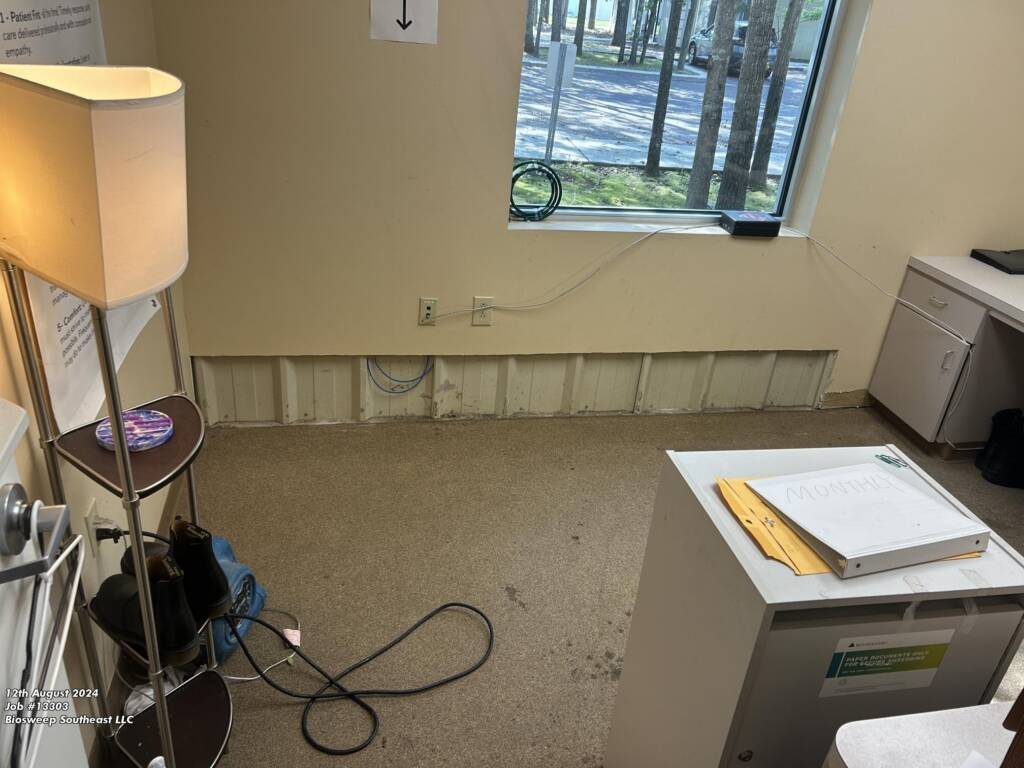
Mold in carpet from water damage is common in humid South Carolina homes, but fast action prevents long-term structural damage and air quality issues.
If you suspect contamination, BioSweep Southeast provides:
- Professional mold inspections
- Water damage mitigation
- Full mold remediation
- APO-based decontamination
- Indoor air quality evaluation
Schedule an inspection online to protect your home and indoor air quality.