
Quick answer: There’s really only one industry-recognized duct cleaning method: mechanical agitation combined with continuous negative-pressure extraction, known as source removal. Chemical treatments and “fogging” are only legitimate as a supplement; never a replacement. The fastest way to evaluate any company’s pitch is to check whether their description includes both physically dislodging debris and containing it with negative pressure, not just one or the other.
You’ve gotten a few quotes, and every company describes its process differently. One mentions “eco-friendly foam,” another talks about “negative pressure extraction,” a third just says they’ll “sanitize and deodorize” your ducts. This guide explains the one method the industry actually recognizes, what to listen for when a company describes theirs, and the questions worth asking before you hire anyone.
The One Method Every Legitimate Duct Cleaning Is Built On
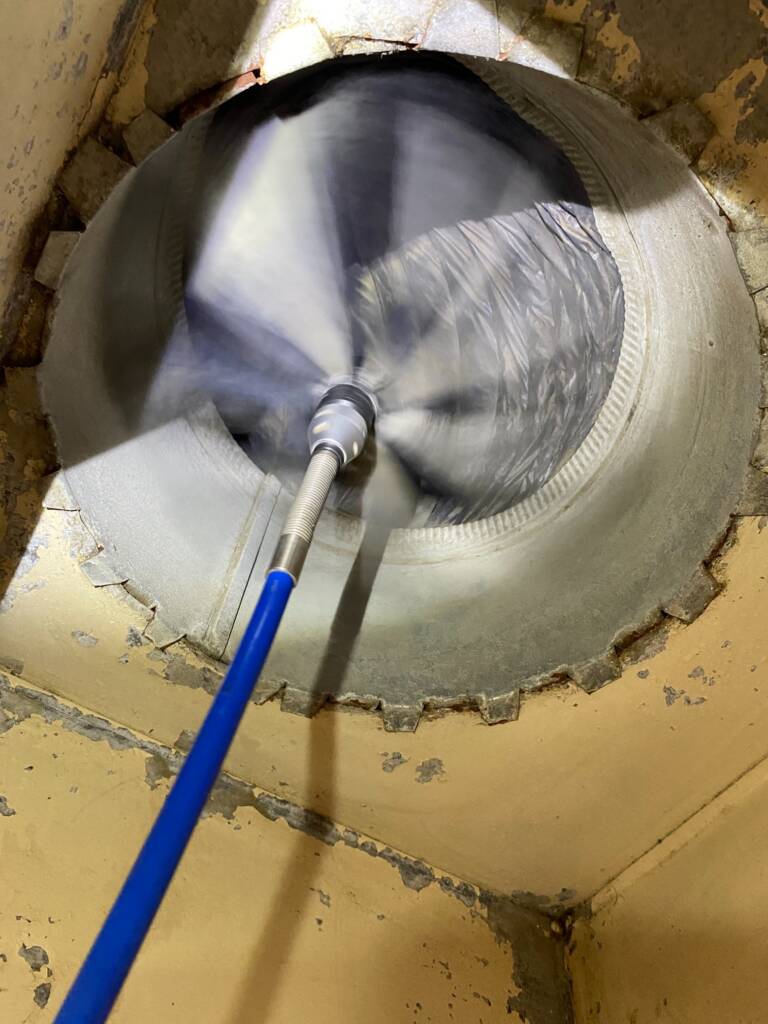
The National Air Duct Cleaners Association (NADCA) describes source removal as the foundational method: mechanical agitation, using brushes, compressed air whips, or similar tools, to physically dislodge debris from duct surfaces, combined with continuous
negative-pressure extraction that pulls loosened material out of the system as it’s freed, so it isn’t just pushed further down the ductwork or released into your home.
That negative pressure piece matters as much as the agitation. Without it, dislodged dust and debris have nowhere to go but back into your living space, or worse, into your HVAC system.
Different companies may name their specific tools differently, such as rotary brushes, air whips, and snake tools, but these are all agitation methods used within source removal, not separate competing categories. Our complete guide to air duct cleaning walks through the process step by step.
What to Listen For When a Company Describes Its Method
A legitimate description of a duct cleaning process, regardless of who is providing it, should account for how debris is physically removed and how it’s contained during the process. A vague or incomplete description is a signal worth paying attention to before you hire anyone.
| A legitimate description includes | A vague or questionable one is missing |
| How debris is physically dislodged from duct surfaces (brushes, air whips, etc.) | Any mention of physical agitation at all |
| Continuous negative pressure or HEPA vacuum extraction during the cleaning | Any mention of containment, meaning loosened debris could just recirculate |
| A pre- and post-cleaning inspection | Any inspection step, before or after |
| Specific, qualified claims about results | Unqualified claims like “kills 100% of mold or bacteria” |
Why Chemical-Only or “Duct Fogging” Isn’t a Substitute for Mechanical Cleaning
NADCA treats antimicrobial and chemical treatments as a conditional supplement, appropriate only after mechanical cleaning has already removed the physical debris, and only using products registered with the U.S. Environmental Protection Agency (EPA). It isn’t a stand-in for mechanical cleaning.
Spraying or fogging a chemical over ductwork that still has dust, debris, or microbial growth on its surfaces treats only what’s on top, without removing what’s actually there. If a company’s entire service is a spray or fog with no mechanical agitation step, that’s not duct cleaning in the sense the industry defines it, and it’s worth asking directly what happens to the debris.
Questions to Ask Before You Hire Anyone
- Do you use mechanical agitation combined with continuous negative pressure?
- What tools do you use to physically dislodge debris from the ducts?
- Do you inspect the ductwork before and after cleaning?
- If any chemical or antimicrobial product is used, is it EPA-registered, and is it applied after mechanical cleaning, not instead of it?
- Can you walk me through your process in specific terms, not just describe the result?
How BioSweep Southeast’s Process Measures Up
At BioSweep Southeast, duct cleaning starts with containment, sealing off vents not being serviced and creating negative air pressure, followed by mechanical agitation using rotary brushes, compressed air whips, and flexible snake tools, with a HEPA vacuum extracting debris throughout. An optional BIOSWEEP® decontamination step follows for microbial contamination and odor, using oxidation rather than harsh chemical sprays, backed by our Odor-Free Guarantee: if the smell returns, so do we, at no additional charge. The process wraps up with a final inspection and airflow test.
That’s mechanical agitation and negative pressure first, consistent with NADCA’s standard, with a non-toxic option for what comes after. Our duct cleaning page has the full breakdown if you want to see the complete process.
Frequently Asked Questions
Is chemical-only duct cleaning enough?
No, not on its own. Chemical or antimicrobial treatment is meant to follow mechanical cleaning, not replace it. If a company’s process is only a spray or fog with no physical agitation step, the underlying debris hasn’t actually been removed.
What should I ask a company before hiring them?
Ask specifically whether they use mechanical agitation combined with continuous negative pressure, what tools they use, and whether they inspect before and after. A company that can answer these specifically is a stronger signal than one that only describes the end result.
Is duct fogging the same as duct cleaning?
No. Fogging applies a chemical treatment to surfaces but doesn’t physically remove debris from the ductwork. On its own, it addresses odor or microbial growth on the surface, not the underlying buildup.
Why Lowcountry Homeowners Choose BioSweep Southeast
If you’re comparing quotes and trying to figure out which one actually describes a legitimate process, the answer comes down to whether mechanical agitation and negative pressure are both part of the plan.
BioSweep Southeast has served Charleston, Mount Pleasant, Summerville, Goose Creek, and the South Carolina Lowcountry since 2009. As an IICRC Certified Firm with EPA certification and an A+ BBB rating, we bring third-party-verified credentials to every job, and you can speak directly with the people doing the work.
Call us at 843-375-6627 or schedule your free on-site assessment, and we’ll walk you through exactly what our process includes.