
Quick answer: Wiping down a vent cover only reaches what you can see. Mold in AC vents almost always starts with moisture at the evaporator coil or drain pan, and once it’s growing inside the ductwork, the EPA treats it as a job for HVAC professionals, not a homeowner cleaning project, regardless of how much area is affected.
You’ve noticed dark specks around a vent, or a musty smell that gets stronger the moment the air conditioner kicks on. It’s tempting to pull the cover off, spray something on it, and call it handled. This guide explains what’s actually causing that mold, how to tell if it’s spread past the cover, and why the real fix usually starts with a professional assessment rather than a cleaning product.
What Causes Mold in AC Vents?
Mold in an AC vent almost never starts at the vent itself. It starts with moisture somewhere upstream in the system.
The most common source is the evaporator coil, which produces condensation every time your AC runs. That water is supposed to drain away through a condensate pan and drain line. When the pan doesn’t slope correctly, the line clogs, or the system isn’t maintained, water sits, and standing moisture becomes a breeding ground for mold. The U.S. Environmental Protection Agency (EPA) notes that condensate pans should be checked routinely because they can become reservoirs for mold if they aren’t properly drained and cleaned.
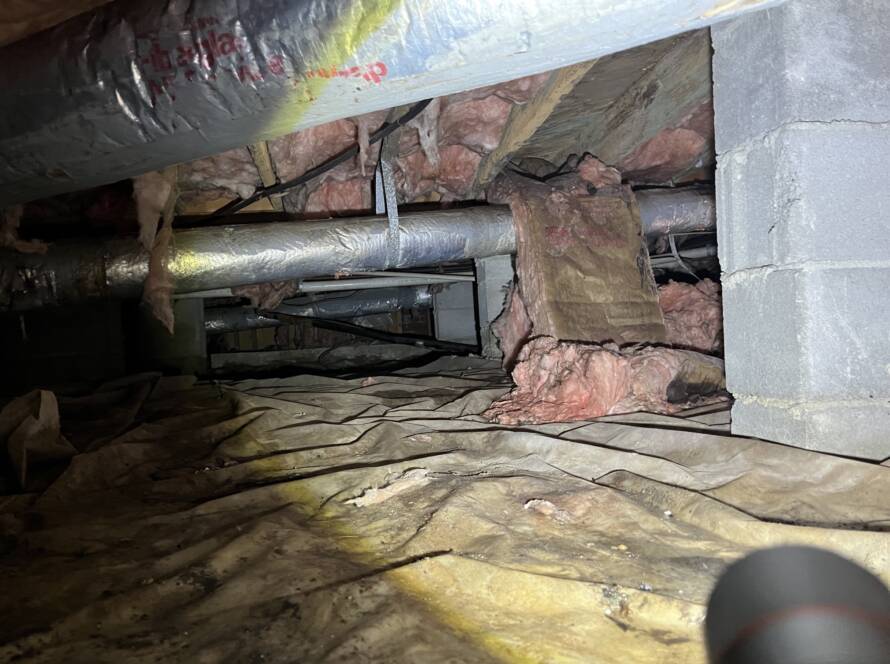
Ductwork adds a second moisture pathway. Ducts running through unconditioned spaces, like an attic or crawlspace, can sweat when warm, humid air meets a cool duct surface. If the ducts aren’t properly sealed and insulated, that condensation gets inside the system instead of staying outside it. In Lowcountry homes with a crawlspace-mounted air handler, that moisture problem is compounded by everything already in the crawlspace air, which is why crawlspace encapsulation is sometimes part of resolving a recurring vent mold problem rather than a separate issue.
Once moisture is present, dust and debris inside the ductwork give mold something to feed on. That combination, moisture plus organic material, is what turns a normal AC system into one growing mold.
Signs You Have Mold in Your AC Vents
A few signals point to mold rather than ordinary dust buildup:
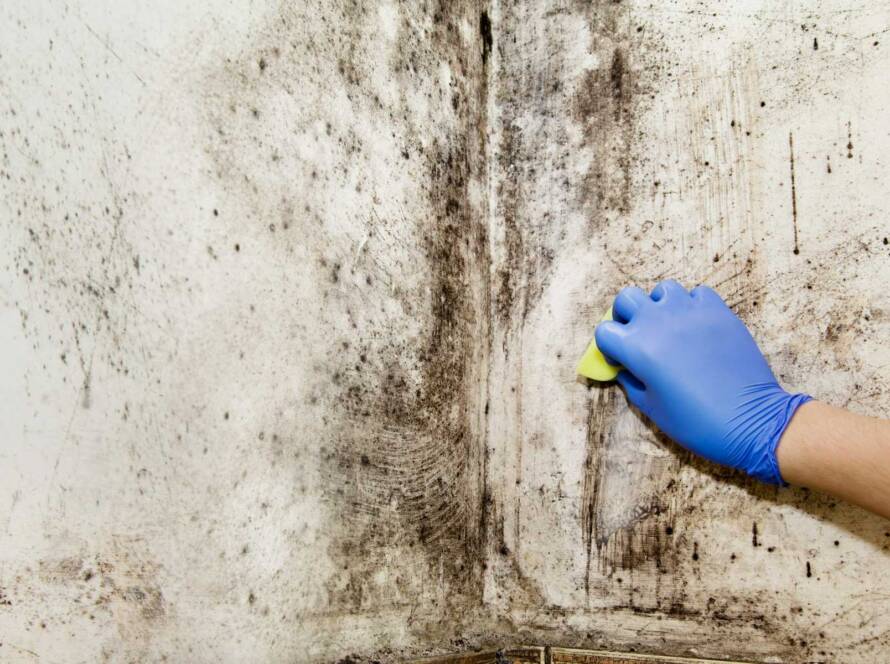
- Dark specks or streaking on the vent cover, the wall around it, or the ceiling near a register
- A musty odor that gets noticeably stronger once the AC starts running
- Visible moisture or condensation on or near the vent, which usually means the underlying moisture problem is still active
- Allergy or respiratory symptoms that seem to track with the AC cycling on and off
If you’re noticing symptoms that seem to line up with when your system runs, our guide to symptoms of breathing in black mold walks through what that pattern typically means and when it’s worth a doctor’s attention.
Why AC Vent and Duct Mold Isn’t a DIY Fix
For general household mold, the EPA’s own guidance allows homeowners to handle small, isolated patches themselves. HVAC systems are the exception. The EPA is clear on this point: an HVAC system found to be contaminated with mold should be turned off and not used until it has been remediated, and that remediation should be done only by professionals experienced in HVAC systems, because running a contaminated system spreads mold spores throughout the building.
There’s also a surface problem that a wipe-down can’t solve. Metal vent covers are non-porous, so a cloth or cleaning solution can lift what’s sitting on top. But duct interiors, insulation, and areas around the coil are often porous or difficult to access, and mold growing there isn’t something surface cleaning reaches at all.
| Where the mold is | What the situation calls for |
| Small, isolated surface mold on a non-HVAC household surface (under about 10 sq. ft.) | The EPA says most homeowners can typically handle this themselves |
| Mold inside HVAC ductwork, coils, or drain pans, at any size | The EPA recommends professional remediation, regardless of square footage |
Professional mold remediation follows the IICRC S520 standard (Institute of Inspection, Cleaning and Restoration Certification), which calls for physical removal of mold from affected materials, proper containment, and HEPA filtration, not a spray-and-wipe approach.
When to Call a Professional for AC Vent or Duct Mold
A few situations point clearly toward professional assessment rather than continued cleaning:
- The musty smell returns within days of wiping down the vent cover
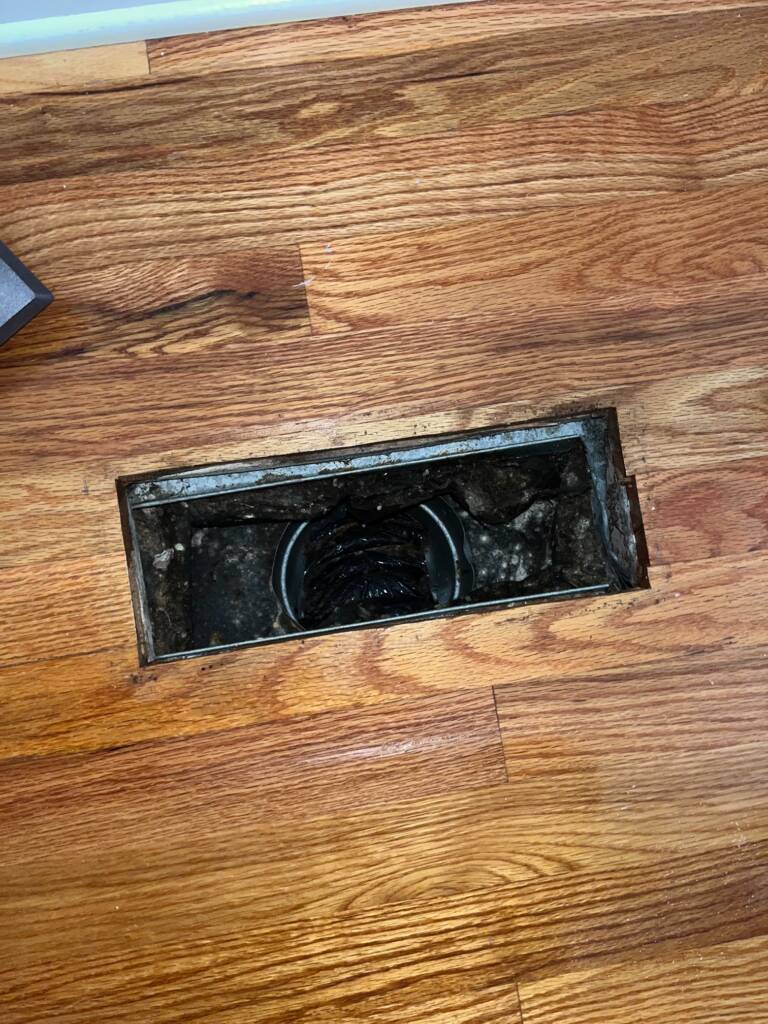
- You can see mold past the register, inside the duct itself
- Moisture keeps reappearing around the vent, even after the area looks dry
- Anyone in the home has asthma or a mold allergy that flares up when the system runs
At BioSweep Southeast, a professional assessment for AC vent or duct mold follows a consistent process:
- On-site assessment of the coil, drain pan, and accessible duct sections to find the actual moisture source
- Evaluation of spread, comparing what’s visible at the register to what’s actually happening deeper in the ductwork
- Physical removal of mold from affected duct materials, following IICRC S520 containment and HEPA filtration protocols
- BIOSWEEP® treatment of accessible non-porous surfaces to address odor-causing compounds at the molecular level, without harsh chemicals or residue
- Post-treatment inspection to confirm the moisture source has been addressed, not just that the smell is gone
BIOSWEEP® is proven on non-porous materials, so porous components like duct insulation or affected drywall still require physical removal first. Our duct cleaning service handles that removal in accordance with IICRC S520 protocols.
If you want a documented picture of what’s actually in your air before and after treatment, our air quality testing service provides a written record for reference.
Why Humidity Makes Vent Mold a Recurring Problem
The Lowcountry’s climate works against your AC system instead of with it. Charleston’s average humidity runs 72% year-round, climbing to 79% in August, with only a brief dip to 67% in February.
Source: Charleston, SC Average Monthly Humidity
That ambient moisture means your evaporator coil is condensing more water more often, your ducts are more likely to sweat if they run through an unconditioned space, and any drainage issue has less margin for error before it becomes a mold problem. It’s also a contributing reason Charleston ranks among the moldiest cities in the country, as our guide to water damage in drywall covers in more detail for the rest of the home.
How to Prevent Mold From Returning to Your Vents
Keeping mold from coming back is a moisture problem, not a cleaning schedule.
- Keep indoor humidity in check. The EPA recommends keeping indoor humidity below 60%, ideally between 30 and 50%.
- Change your AC filter on schedule. ENERGY STAR recommends checking your filter monthly and replacing it at least every 3 months to keep airflow consistent and prevent dust from accumulating as a food source for mold.
- Have your drain pan and condensate line checked during routine HVAC maintenance so water isn’t sitting where it shouldn’t.
- Schedule a professional duct and coil inspection periodically, especially in a Lowcountry home, rather than waiting for a smell or visible spot to prompt it.
None of this guarantees mold won’t return. Mold depends on moisture, and moisture conditions in a coastal climate change with the seasons. Addressing the source is what keeps the problem from repeating.
Frequently Asked Questions
Can I clean mold from my AC vents myself?
You can wipe visible mold off a metal vent cover. But the EPA specifically recommends that mold inside an HVAC system, ductwork, coils, or drain pans be handled by professionals experienced with HVAC systems, regardless of how much area is affected. Cleaning the cover doesn’t address mold growing inside the system.
Is mold in AC vents dangerous?
It can affect indoor air quality and trigger allergy or respiratory symptoms, especially for people with asthma or mold sensitivities. Our guide to symptoms of breathing in black mold covers what those symptoms look like and when they warrant medical attention.
How much does professional duct or coil mold remediation cost?
It depends on how far the mold has spread and what’s causing the moisture. Rather than guess, a free on-site assessment from BioSweep Southeast gives you a written estimate based on what’s actually happening in your system.
Does duct cleaning get rid of mold for good?
Professional remediation removes mold from affected surfaces and addresses the moisture source driving it, in accordance with IICRC S520 standards. It doesn’t guarantee mold will never return, because that depends on ongoing moisture control. Our Odor-Free Guarantee applies to odor treatments, not mold outcomes.
Does mold in my AC vents mean I have mold elsewhere in my house?
Not necessarily, but it’s worth checking. Because HVAC systems circulate air throughout the home, a contaminated system can spread mold spores to other rooms, even where no visible growth is present yet. That’s part of why the EPA recommends turning off a contaminated system rather than continuing to run it while the source is addressed.
Will homeowners insurance cover AC duct mold remediation?
It depends on your policy and what caused the moisture; insurance carriers often treat gradual condensation issues differently than sudden water damage. We provide full documentation, including assessment findings and process records, to support your claim, but coverage itself is determined by your carrier.
Why Homeowners Choose BioSweep Southeast
If mold has made its way into your AC vents, the fix starts with finding out what’s actually happening inside the system, not just what’s visible on the cover.
BioSweep Southeast has served Charleston, Mount Pleasant, Summerville, Goose Creek, and the South Carolina Lowcountry since 2009. As an IICRC Certified Firm with EPA certification and an A+ BBB rating, we bring third-party-verified credentials to every assessment, and you can speak directly with the people doing the work.
We identify the moisture source, evaluate how far mold has spread inside your system, and give you a written picture of what we found before any remediation begins.
Call us at 843-375-6627 or schedule your free on-site assessment.