
Quick answer: Water-damaged drywall can often be dried and saved if the water was clean and the panel is dried within 24 to 48 hours. Drywall soaked with contaminated water, wet for longer than that window, or already showing mold must be removed and replaced, not dried in place. In Charleston’s humidity, that window closes faster than general guidance assumes.
A stain spreading across your ceiling. A soft spot near the bathroom wall that gives when you press it. Once drywall gets wet, you’re on a clock, not just to dry it out, but to figure out whether it’s still salvageable at all. This article walks through how to recognize water damage in drywall, when it’s safe to dry in place, and when the wall needs to come out before mold turns a repair job into a bigger problem.
What Does Water Damage to Drywall Look Like?
Drywall shows water damage in three ways: visually, physically, and by smell.
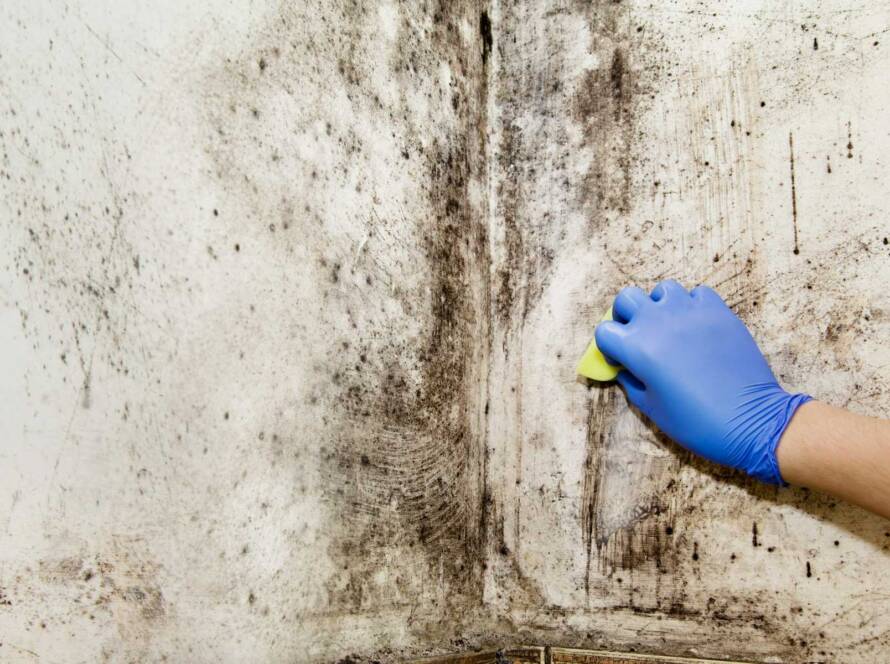
- Discoloration. Yellow, brown, or gray staining, often with a ring pattern as water spreads outward from the source.
- Bubbling or peeling paint. Trapped moisture pushes paint away from the surface as the drywall beneath swells.
- Soft or spongy texture. Press gently on the wall. If it gives instead of holding firm, the gypsum core has absorbed water and started to break down.
- Sagging or bowing. A ceiling or wall that visibly dips is carrying the weight of water it’s absorbed and is at risk of collapse.
- Musty odor. A smell that lingers even after the area looks dry usually means moisture, and possibly mold, is still active behind the surface.
Any one of these on its own is worth investigating. More than one together means the damage has likely been sitting longer than 24 to 48 hours already.
Is the Drywall Safe to Dry in Place, or Does It Need to Come Out?
This is the decision that actually matters, and it comes down to two things: what was in the water, and how much of the panel got wet. The restoration industry, through the Institute of Inspection, Cleaning and Restoration Certification (IICRC), classifies water intrusions by contamination level, clean water versus contaminated gray or black water, and that distinction is the starting point for whether a wall can be dried in place or needs to come out.
| If the wall got wet from… | And… | Then… |
| Contaminated water (sewage, appliance overflow, floodwater) | Most of the panel is soaked | Remove and replace the drywall entirely |
| Clean water (rainfall, a supply line, an ice maker line) | Most of the panel is soaked | Often salvageable: cut a 4 to 12-inch strip from the top and bottom for airflow, then dry with fans and a dehumidifier |
| Either source | Soaked 4 feet or higher above the floor | Remove and replace regardless of water source; saturation this high compromises the panel |
| Either source | Soaked less than 4 feet high | Remove just the lower section and patch in new sheets |
Source: University of Michigan EHS: Repairing Walls from Water Damage to Prevent Mold Growth (citing American Red Cross/FEMA and University of Wisconsin Extension)
Drywall’s paper facing is an organic material, exactly the kind of surface mold colonizes fastest, and it becomes fragile and starts falling apart if it stays wet too long. When the water source is contaminated, or when it’s been sitting long enough to raise questions, the safer call is removal rather than a wait-and-see approach.
Why Lowcountry Humidity Changes the Timeline
A “let it dry out for a few days” approach that works in a drier climate doesn’t hold up the same way in Charleston. The Lowcountry’s average humidity runs 72% year-round, climbing to 79% in August, with only a brief dip to 67% in February.
Source: Charleston, SC Average Monthly Humidity
That persistent moisture in the air is a major reason Charleston ranks 17th among the moldiest cities in the country. Wet drywall in a home that’s already fighting ambient humidity doesn’t get the benefit of dry air pulling moisture back out the way it would elsewhere, which is exactly why the drying-in-place window is narrower here than the general guidance assumes.
Source: Charleston Among Moldiest U.S. Cities
If you’re trying to dry out a wall with fans and an open window in Charleston in July, you’re working against the outdoor air, not with it. A dehumidifier isn’t optional here, the way it might be in a drier region.
What Happens If Mold Has Already Started Behind the Wall?
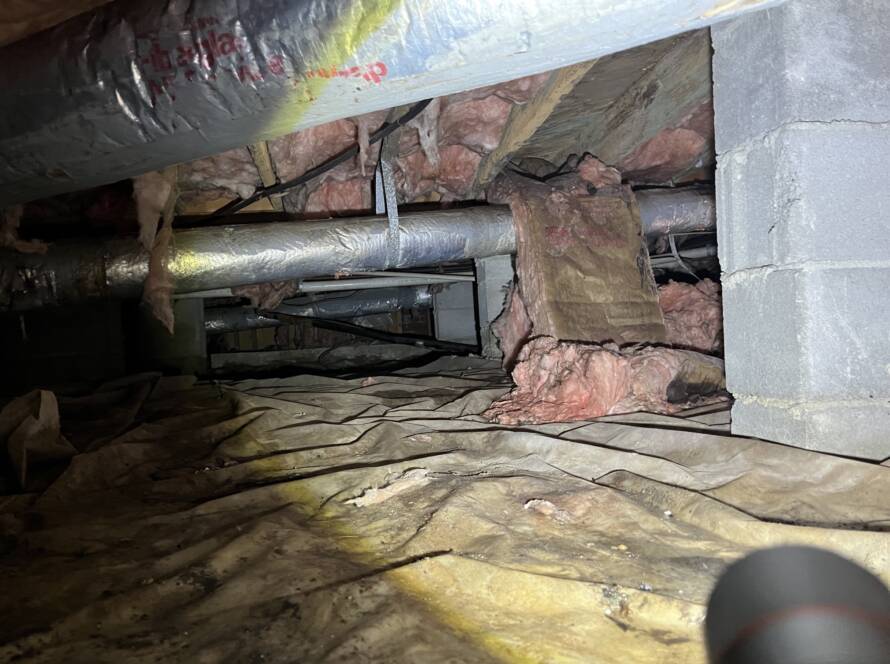
The Environmental Protection Agency (EPA) is direct about the timeline: if wet materials are dried within 24 to 48 hours of a leak or spill, mold growth is usually avoidable. Past that window, especially on porous material like drywall, mold can already be established on the hidden backside before it ever becomes visible on the surface.
Source: EPA: A Brief Guide to Mold, Moisture and Your Home
If mold has already taken hold, the fix isn’t a spray or a wipe-down. Mold-affected drywall needs to be physically removed and discarded following IICRC S520 mold remediation standards. BIOSWEEP®’s oxidation technology is proven on non-porous surfaces, and drywall’s paper facing is porous, so it isn’t a substitute for that removal step.
Once the affected material is out and the moisture source is addressed, BIOSWEEP®’s process treats the surrounding air and remaining surfaces to eliminate odor at the molecular level. The space doesn’t just look clean, it’s actually clear of the smell that tends to linger after a water event.
Addressing the moisture source itself matters as much as the wall. Removing moldy drywall without finding and fixing what caused it to get wet in the first place just resets the clock on the same problem.
For a deeper look at how the full restoration process works from the first call through reconstruction, our complete guide to water damage restoration walks through each stage in order.
What to Do in the First 24-48 Hours
- Stop the water source if it’s still active, whether that means shutting off a supply line or placing a container under a slow ceiling leak.
- Start air movement immediately. Fans and a dehumidifier, not just an open window, especially in Charleston’s humidity.
- Don’t paint or patch over a stain before the wall is confirmed dry. Sealing in moisture guarantees a mold problem later.
- Photograph the damage as you find it, before any drying or repair begins, in case you need it for an insurance claim.
- Call for a professional assessment if you’re unsure whether the water source was clean, if the drywall has been wet for more than a day or two, or if you notice any odor. Our article on who to call for water damage in a wall breaks down what to expect from that first call.
Frequently Asked Questions
Can I just paint over water-damaged drywall?
No. Painting over it seals in moisture instead of resolving it. Confirm the wall is fully dry, ideally through a professional assessment, before repainting.
How long can drywall stay wet before it’s ruined?
Beyond 24 to 48 hours, mold growth becomes likely, and the longer a panel stays wet, the more fragile it gets. Contaminated water shortens that window further.
Does a small water stain always mean I need to replace the whole wall?
Not necessarily. A small, isolated stain from clean water that’s caught and dried quickly may only need a cosmetic patch. Drywall wicks moisture upward as it absorbs it, so the damage can extend above what’s visible, which is why professional assessment matters even when the stain looks minor.
Will my homeowner’s insurance cover drywall water damage?
Coverage depends on your policy and the cause of the water intrusion. We provide full documentation, including damage assessments and process records, to support your claim, but coverage itself is determined by your carrier.
Ready to Call a Professional?
Wet drywall doesn’t wait for a convenient time to become a mold problem, especially in the Lowcountry’s humidity. If you’re seeing staining, softness, or a smell that won’t go away, schedule a free on-site assessment with BioSweep Southeast. We’ll walk you through exactly what we find and provide a written estimate before any work begins.
Call 843-375-6627 or schedule your free assessment today.