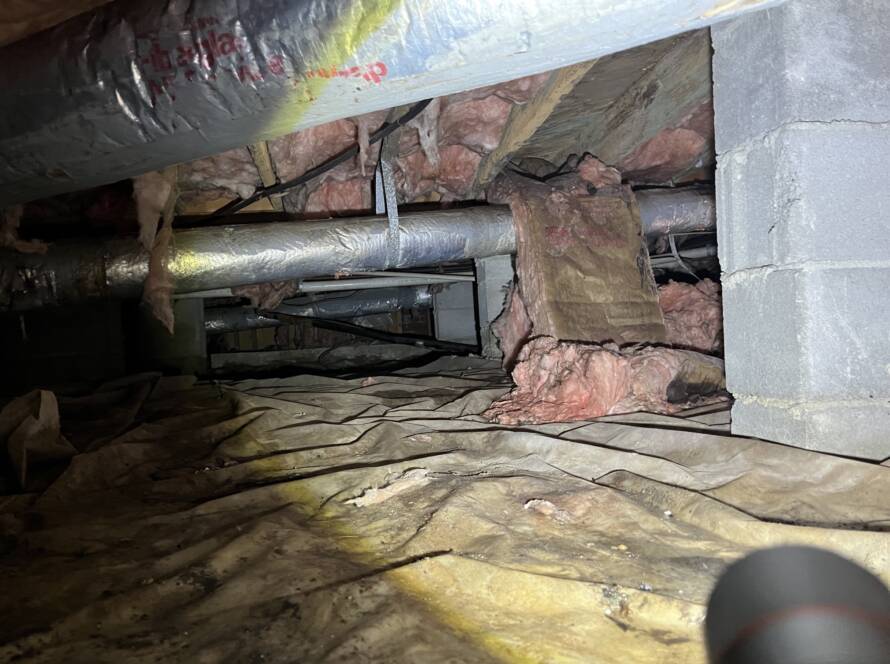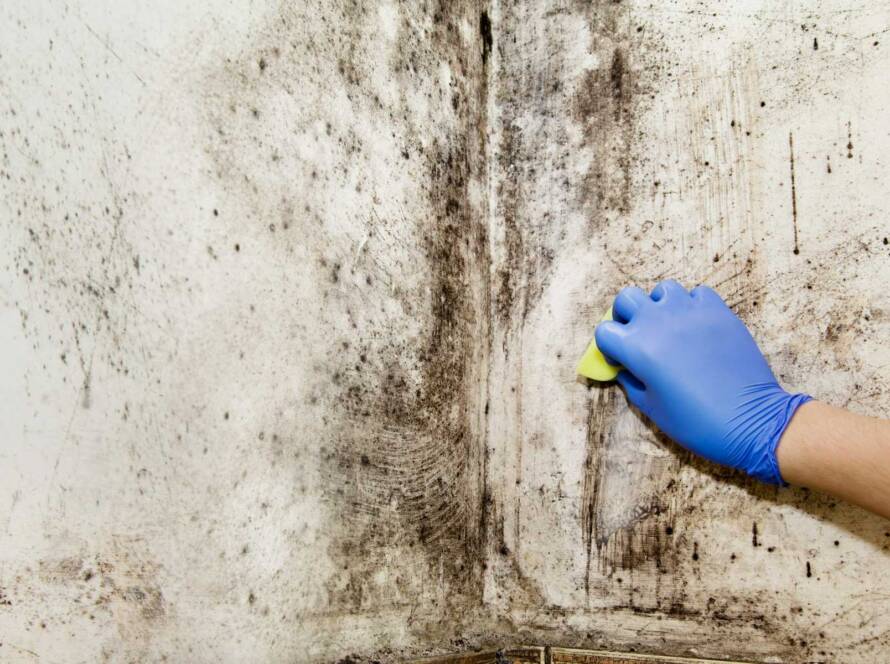

Cabinets are one of the first places to suffer when water damage strikes a kitchen or bathroom. Whether it’s a leaky dishwasher, burst pipe, or flooding event, moisture quickly seeps into wood or MDF cabinet boxes. Left untreated, this leads to warping, swelling, mold growth, and eventually the need for full replacement.
BioSweep Southeast specializes in water damage inspection and restoration, helping homeowners stop damage before it spreads. Here’s what you need to know if your cabinets have been exposed to water.
What happens when cabinets get water damaged?
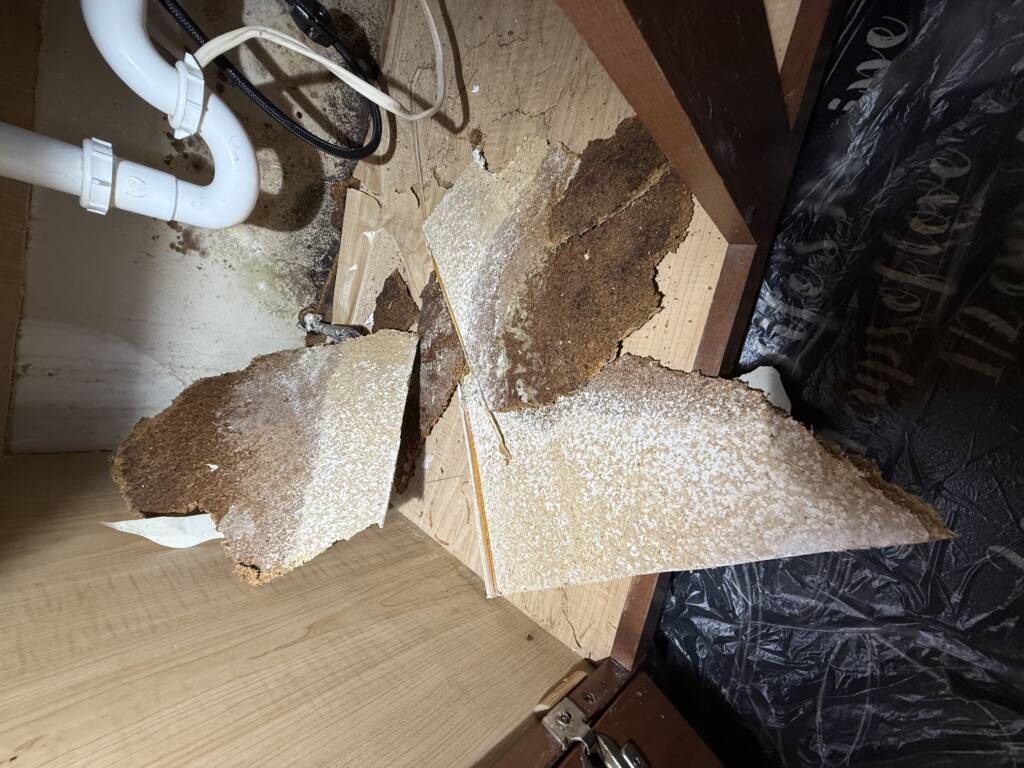
Cabinets are especially vulnerable because most are made of wood or engineered wood products. When exposed to water:
- The wood fibers swell and warp.
- Veneers or laminates may separate from the base material.
- Joints loosen, making cabinets unstable.
- Mold begins growing in as little as 24–48 hours.
Even cabinets that look only “slightly damp” can hide trapped moisture that weakens the structure and creates health hazards.
Can water damaged cabinets be repaired?
In some cases, yes — but it depends on the extent of the damage and how quickly drying begins.
- Minor damage: If water was cleaned up immediately, cabinets may only need drying and refinishing.
- Moderate damage: Swollen cabinet boxes often need partial replacement while face frames and doors may be salvaged.
- Severe damage: If cabinets are warped, mold-infested, or structurally unsound, replacement is the safest option.
BioSweep Southeast begins every project with a professional inspection. Our team determines whether your water damaged cabinets can be restored or if replacement is more cost-effective.
Why is quick action so important with water damaged cabinets?
Water damage is progressive — the longer moisture sits, the more destructive it becomes.
- Within hours, cabinet finishes can discolor.
- Within days, swelling and structural weakness set in.
- Within a week, mold colonies can spread inside cabinets, walls, and air systems.
BioSweep uses advanced drying and dehumidification methods to stop damage before it worsens. Acting fast can often mean the difference between repair and replacement.
How does BioSweep handle water damaged cabinets?
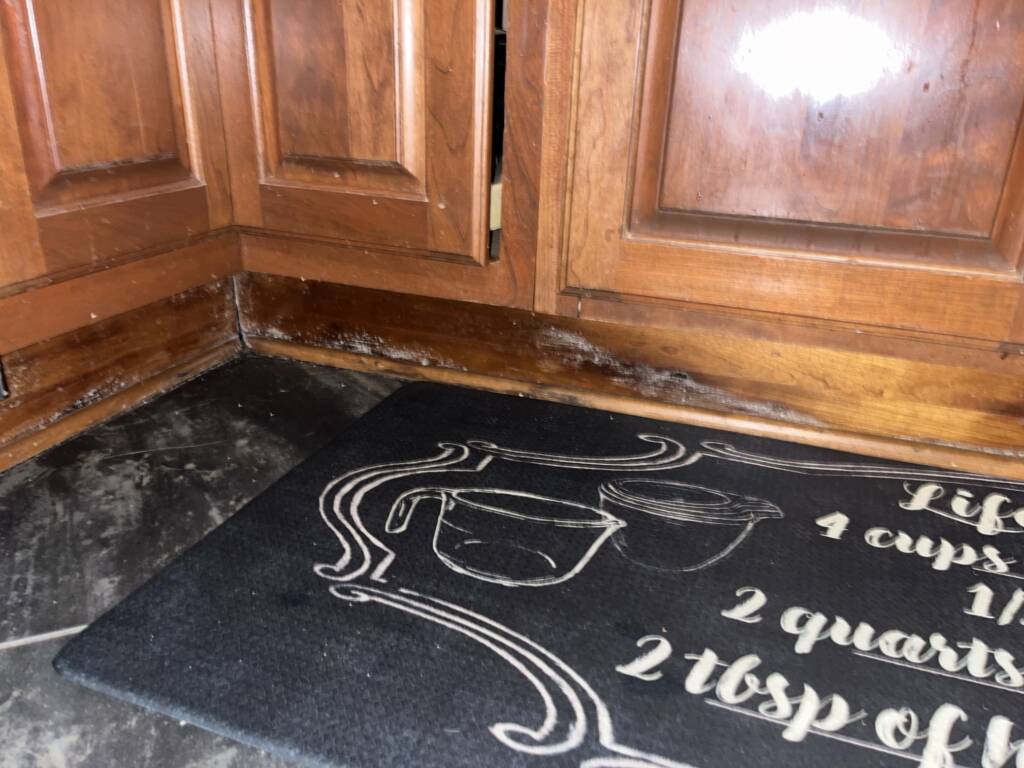
BioSweep Southeast follows a structured process to protect your property:
- Inspection – Assess visible and hidden cabinet damage, including checking for moisture inside walls and flooring.
- Moisture removal – Deploy professional-grade drying and dehumidification equipment to remove trapped water.
- Mold prevention – Apply our Advanced Photocatalytic Oxidation (APO) treatment to eliminate airborne spores and ensure safe indoor air quality.
- Water Damage Restoration plan – Provide a clear report outlining what can be salvaged, what must be replaced, and projected costs.
By combining moisture control with microbial elimination, BioSweep ensures your home is safe, dry, and healthy after water damage.
What role does mold play in water damaged cabinets?
Moisture and organic material create the perfect conditions for mold. Cabinets often hide mold growth behind panels, under sinks, or inside walls. Left untreated, mold spreads and releases spores that contaminate indoor air.
BioSweep Southeast specializes in mold removal and prevention. Our APO technology destroys mold spores at the molecular level, ensuring that once restoration is complete, your home’s air is safe to breathe.
Does insurance cover water damaged cabinets?
In many cases, yes — but it depends on the source of the water.
- Sudden events (burst pipes, appliance leaks, storm flooding) are often covered.
- Neglect or gradual leaks may not be covered.
BioSweep provides detailed documentation of the damage and restoration process, which is crucial for filing successful insurance claims.
How much does it cost to repair or replace water damaged cabinets?
Costs vary depending on the size of the kitchen, materials, and extent of the damage:
- Drying and refinishing: Lower-cost if damage is minimal.
- Partial cabinet replacement: Moderate cost if face frames or doors can be salvaged.
- Full cabinet replacement: Most expensive, typically required if structural integrity is lost or mold is widespread.
While online averages suggest kitchen cabinet replacement can cost several thousand dollars, BioSweep’s inspection gives homeowners a realistic, customized estimate based on actual conditions.
What should you do if your cabinets are water damaged?
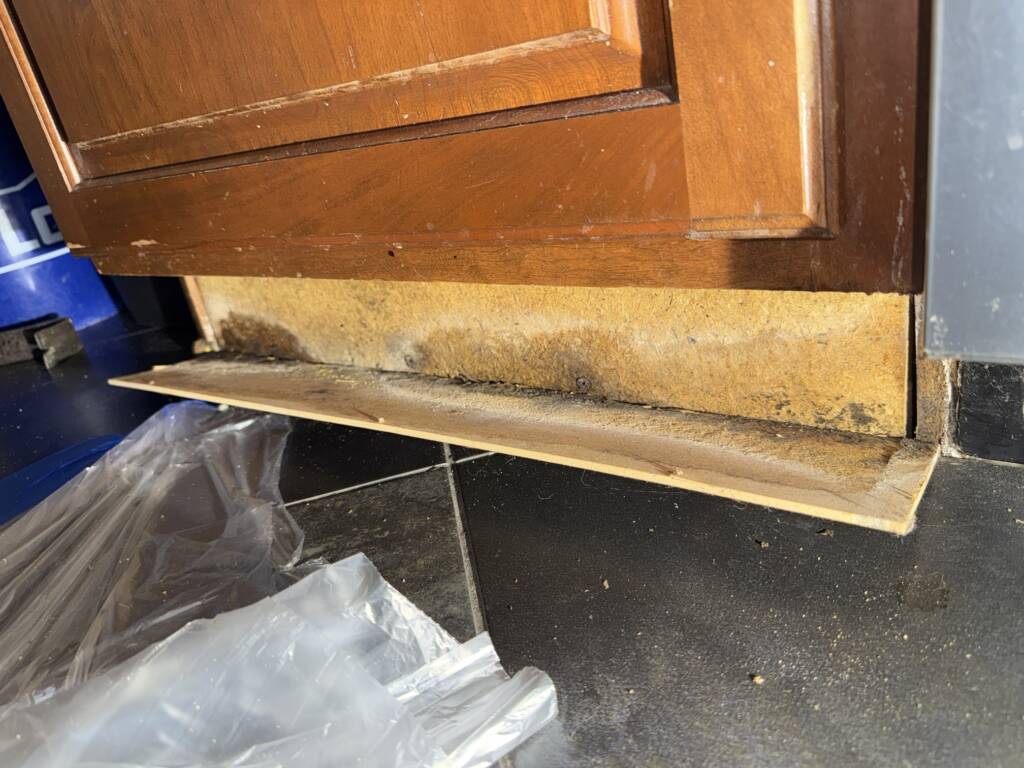
Here’s the step-by-step approach homeowners should follow:
- Stop the water source (turn off supply lines, shut down appliances, or call a plumber).
- Avoid using the affected area wet cabinets may collapse or harbor mold.
- Call a professional restoration company like BioSweep Southeast immediately.
- Document the damage with photos for your insurance claim.
Delaying or attempting DIY repairs often leads to more costly damage down the line.
Why choose BioSweep for water damaged cabinets?
BioSweep Southeast is more than a restoration company. We provide:
- Rapid response – Quick inspection and drying to prevent further loss.
- Advanced technology – APO treatment to eliminate mold spores and restore safe air quality.
- Comprehensive documentation – Detailed reports for insurance and repair planning.
When cabinets are water damaged, BioSweep ensures both the structure and the air you breathe are safe.
Final Takeaway
Water damaged cabinets may look like a cosmetic issue, but they often signal deeper structural and health concerns. The faster you act, the better your chances of saving part of your cabinetry and avoiding mold.
By contacting BioSweep Southeast, you get more than drying you get advanced protection for your home, your health, and your peace of mind.