
The smell hits when the AC kicks on, musty, damp, unmistakably wrong. Or you notice dark dust gathering around your vents faster than it should. Or a mold remediation company just finished your crawl space and told you the HVAC system needs attention, too.
Mold in air ducts is one of the more misunderstood problems a homeowner can face, partly because the word “cleaning” gets used for two very different situations. Routine duct cleaning removes debris, dust, and buildup. Mold remediation addresses active biological growth and the moisture condition that caused it. Confusing the two leads to treatments that don’t hold and problems that keep returning.
This guide covers how to identify mold in your ductwork, what your duct type means for your options, and what a proper mold remediation process entails.
Why Air Ducts Are a High-Risk Environment for Mold

How Moisture Gets Into Ductwork
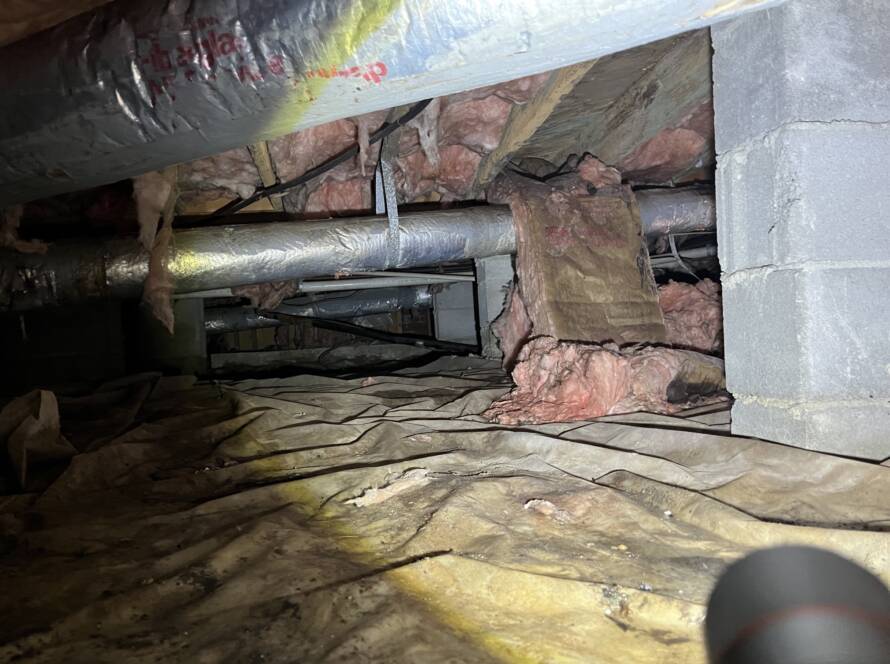
Mold grows wherever moisture and an organic food source meet. In ductwork, moisture enters through several pathways: condensation on the exterior of supply ducts when cold air moves through warm, humid spaces; leaks in the duct system that draw in unconditioned air; clogged condensate drain lines that allow water to back up into the air handler; and high indoor humidity that the HVAC system is undersized or failing to control.
According to the EPA, mold growth in ductwork will recur unless the underlying condition is corrected. This is the distinction that separates remediation from cleaning: cleaning removes what’s there; remediation addresses why it grew.
In Charleston and the South Carolina Lowcountry, the coastal climate makes this a persistent risk. Outdoor humidity is elevated for most of the year, and HVAC systems run long cooling seasons under sustained moisture pressure. Systems that are not properly balanced, sealed, or maintained are regularly pulling humid air through gaps in the duct system, creating exactly the conditions mold needs.
Why Mold in Ducts Affects the Whole Home
A mold colony on a bathroom ceiling affects one room. Mold in a duct system affects every room it serves. When the air handler runs, it draws air across the contaminated surface and distributes spores through the supply registers throughout the house, including rooms with no visible mold or other obvious source.
The EPA notes that indoor levels of some pollutants may be two to five times, and occasionally more than 100 times, higher than outdoor levels. An HVAC system actively circulating mold spores is one of the more direct routes to indoor air quality degradation. For occupants with asthma, allergies, or respiratory sensitivities, this is not a background concern it is an active daily exposure.
Signs You Have Mold in Your Air Ducts
Some signs are visible. Others require paying attention to patterns that are easy to attribute to something else.
- Musty odor when the system runs is the most reliable indicator. If the smell appears or intensifies when the AC or heat kicks on and fades when the system is off, the source is inside the system
- Dark or discolored dust around registers, black, gray, or greenish dust accumulating at vent covers faster than normal, particularly if it reappears shortly after cleaning
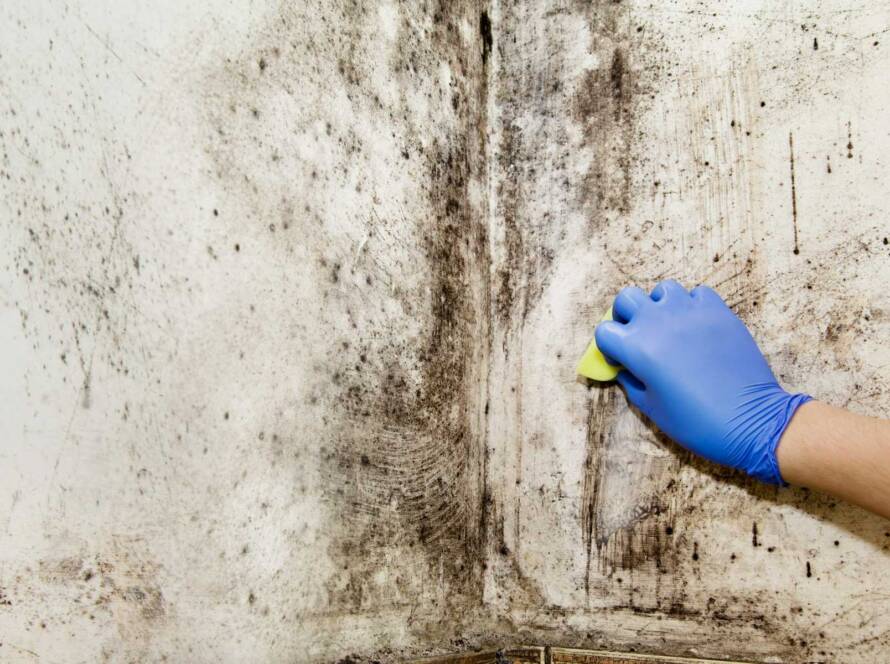
- Visible growth on or around vent covers, fuzzy or spotted discoloration on the grille itself or on the ceiling or wall immediately surrounding it
- Worsening allergy or respiratory symptoms indoors that improve when you leave the home or turn the system off
- A recent mold event elsewhere in the home, crawl space mold, water damage, or a remediated area connected to the HVAC system raises the probability that ducts were involved
- Moisture around the air handler or drip pan, standing water, or rust staining near the unit signal a drainage or condensation problem that can migrate into the duct system
None of these individually confirms mold. As the EPA notes, a definitive determination requires professional inspection and in some cases, laboratory analysis. But any combination of the above warrants a professional assessment before the system continues to run.
Duct Cleaning vs. Mold Remediation: What’s the Difference?
Routine duct cleaning removes accumulated dust, debris, pet dander, and general buildup from duct interiors. It improves airflow and reduces particulate load in the air supply. For systems without active mold growth, it is a useful maintenance service, but categorically different from what mold requires.
Mold remediation in ductwork involves identifying and eliminating active mold growth, addressing the moisture source that allowed it to develop, treating affected surfaces with appropriate antimicrobial agents, and verifying through post-remediation inspection that the problem is resolved. It is a remediation process, not a cleaning service.
If a company is offering to “clean the mold out of your ducts” with the same service they use for routine maintenance, that is worth scrutinizing. Standard duct-cleaning equipment, rotating brushes, compressed air, and HEPA vacuums dislodge and extract debris. It does not eliminate mold at the source or address the moisture condition driving it. For contamination from construction debris or renovation dust, standard cleaning is the right tool. For active mold, it is not sufficient on its own.
Does Your Duct Type Determine Whether Cleaning Is Even Possible?
Yes, and this is one of the most important things to understand before any treatment begins.
Sheet Metal Ducts
Galvanized sheet metal is a non-porous surface. Mold growing on the interior of sheet metal ductwork has not penetrated the material it is colonizing the surface. This makes it amenable to mechanical cleaning followed by antimicrobial treatment. At BioSweep Southeast, this is where the BIOSWEEP® Multi-Phase Oxidation System is directly applicable to non-porous sheet metal surfaces to eliminate mold at the molecular level and address residual odor, rather than masking it.
Sheet metal ducts with mold are treatable. The process requires proper containment, mechanical agitation under negative pressure, and antimicrobial treatment, but the material itself can be remediated in place.
Fiberglass-Lined and Insulated Ducts
Fiberglass duct liner and internally insulated flexible ductwork are porous materials. Mold that penetrates fiberglass insulation cannot be removed by cleaning the fibers, which absorb and hold the growth in a way that mechanical agitation only distributes rather than eliminates. The EPA is explicit on this point: if insulation inside ductwork becomes moldy, it cannot be effectively cleaned and must be replaced.
This is a material determination, not a judgment call. Any company that proposes to clean mold from fiberglass-lined ducts rather than replace the affected sections is not following EPA guidance. A proper assessment identifies the duct type and scope of affected material before any treatment plan is proposed.
How Professional Air Duct Mold Remediation Works
Step 1 Inspect and Confirm Mold Presence
Remediation begins with a thorough inspection of the full HVAC system not just the visible registers, but the air handler, coil, drip pan, plenum, and accessible duct runs. This typically involves borescope cameras to view duct interiors without full access. If growth is identified, the material is assessed for duct type and contamination depth before any treatment decisions are made.
Where the nature of the growth is unclear, laboratory sampling confirms whether what is present is mold and, if needed, what species. The EPA recommends professional inspection and lab analysis for definitive identification; visual assessment alone is not sufficient for a mold determination.
Step 2: Identify and Address the Moisture Source
No remediation holds without resolving the moisture source. Before work on the ducts begins, the pathway that allowed moisture into the system must be identified and corrected, whether that is a refrigerant issue causing excessive condensation, a drainage line blockage, duct leakage drawing in humid unconditioned air, or an undersized system struggling to dehumidify the space.
Treating mold in ducts without correcting the moisture condition is only temporary. The EPA identifies moisture control as the foundation of all effective mold remediation. This applies as directly to ductwork as it does to crawl spaces or wall cavities.
Step 3: Contain and Establish Negative Pressure
Before mechanical cleaning begins, the work area is isolated. Supply and return registers throughout the home are sealed. Negative air pressure is established with HEPA-filtered air scrubbers to ensure that spores dislodged during cleaning are captured rather than distributed into living areas. Workers are in full PPE before any disturbing of mold-affected surfaces begins.
Step 4 Mechanical Cleaning Under HEPA Filtration
Rotary brushes and pneumatic agitation tools dislodge mold and debris from duct surfaces. Simultaneously, truck-mounted or portable HEPA vacuum systems extract the loosened material under negative pressure. The process moves systematically from the air handler outward through the duct runs, with access points sealed between sections.
Step 5: Treat Non-Porous Duct Surfaces
Following mechanical cleaning of the sheet-metal ductwork, the BIOSWEEP® Multi-Phase Oxidation System is applied to the interior duct surfaces. The system’s photocatalytic oxidation, hydroxyl radical generation, purified ozone, plasma gas, UVC radiation, and hydrogen peroxide vapor components break apart residual mold compounds at the molecular level, eliminating both the biological contamination and the associated odor rather than masking either. Every treatment is backed by our Odor-Free Guarantee: if the smell returns, so do we.
This step applies to non-porous sheet metal surfaces. Porous components, fiberglass liner, flexible duct insulation, and contaminated filters are addressed in Step 6.
Step 6: Replace Unsalvageable Components
Fiberglass-lined duct sections, flexible duct runs with mold penetration, contaminated insulation around the air handler, and any other porous material that cannot be remediated in place are removed, bagged, and replaced. This is not optional it is the standard the EPA’s own guidance establishes for insulated duct components with mold.
Filters are replaced as a matter of course. Coil and drip pan cleaning is performed if contamination is present at the air handler.
Step 7 Post-Remediation Verification
The job is not complete when the visible mold is gone. Post-remediation inspection confirms that cleaning and treatment were effective and that moisture conditions are under control before the system is returned to operation. Where the scope of contamination warrants it, air sampling provides a documented baseline confirming the remediation outcome. Our air quality testing service provides that documentation for homeowners who want a verified record.
Frequently Asked Questions
Can I clean mold from air ducts myself?
For most situations, no. Disturbing mold in ductwork without proper containment and negative pressure aerosolizes spores throughout the system and into living areas making the problem significantly worse. The EPA recommends professional remediation for substantial mold growth in ductwork. For very small, isolated surface spots on accessible sheet metal, some homeowners attempt spot treatment, but without resolving the moisture source and verifying the full extent of growth, the result is almost always temporary.
How much does air duct mold remediation cost in South Carolina?
It depends on the size of the system, the duct material, the extent of growth, and whether component replacement is required. A system with sheet metal ducts and contained surface mold costs significantly less than one requiring fiberglass liner replacement throughout. BioSweep Southeast provides free on-site assessments with written estimates the only way to get an accurate figure for your specific system.
Will mold come back in my ducts after remediation?
Not if the moisture source is corrected. Mold recurs when the conditions that produced it remain in place. A properly conducted remediation identifies and resolves the moisture pathway condensation, drainage, duct leakage, or humidity load before treatment begins. Without that step, recurrence is likely regardless of how thorough the cleaning was.
How often should air ducts be inspected for mold in coastal climates?
Annually, at a minimum. In a Lowcountry climate with sustained high outdoor humidity and long cooling seasons, HVAC systems run under elevated moisture pressure year-round. An annual inspection of the air handler, coil, drip pan, and accessible duct interiors catches early-stage growth before it spreads through the system and identifies any developing moisture issues before they become remediation-level problems.
Have Your System Assessed Before the Problem Spreads
Mold inside a duct system does not stay contained. Every time the air handler runs, it moves whatever is in the ducts through every room the system serves. The longer an active mold problem goes unaddressed, the more of the system it reaches.
BioSweep Southeast provides free on-site assessments with written estimates for HVAC mold remediation throughout Charleston, Mount Pleasant, Summerville, Goose Creek, and the South Carolina Lowcountry. We are IICRC Certified, SC DHEC certified for environmental services, EPA certified, and carry an A+ BBB rating. If you are smelling something you can’t source or seeing dust patterns that don’t make sense, call us and we will tell you exactly what you are dealing with.
843-375-6627 | Available 24/7 for emergency response.