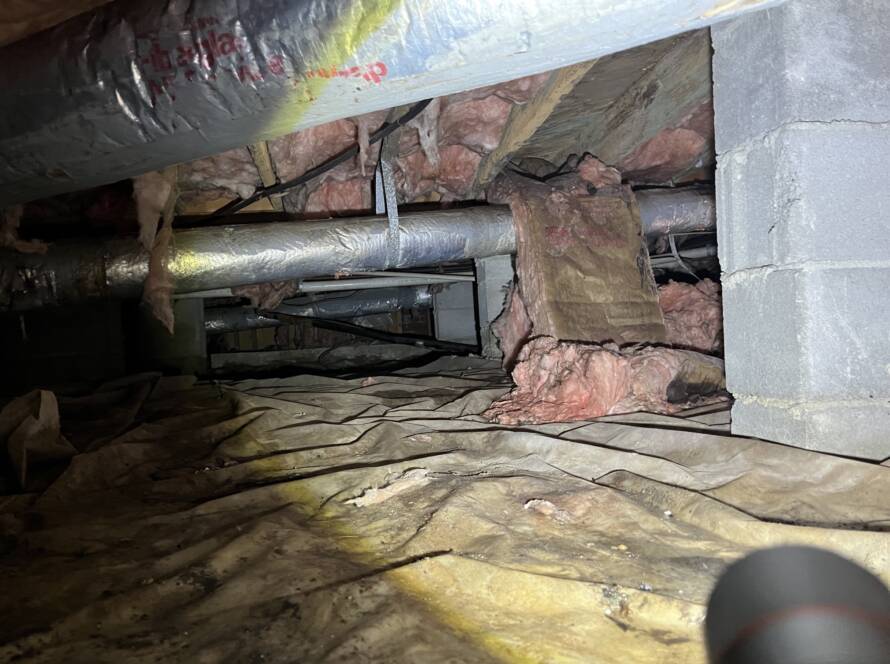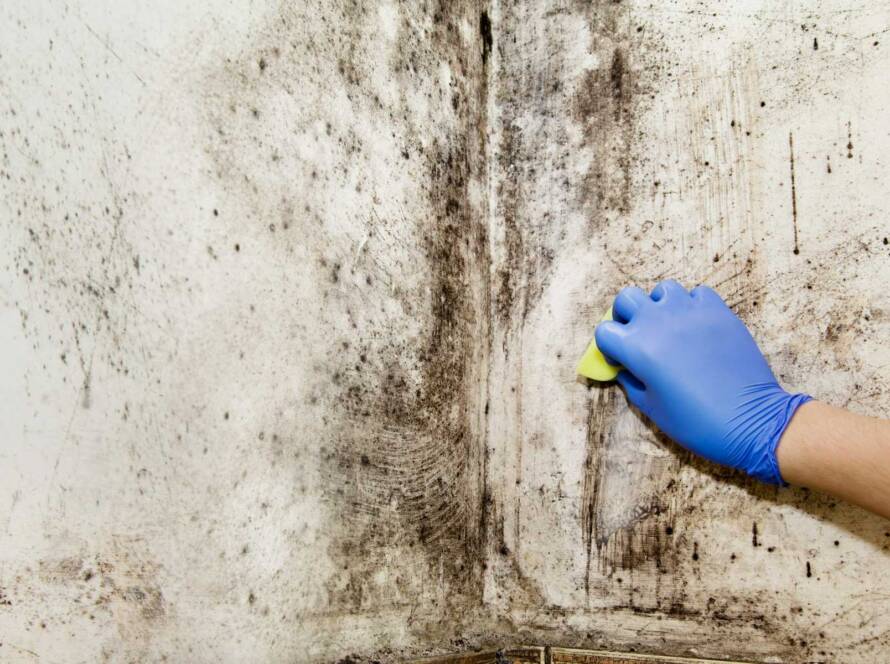

Water damage in kitchen cabinets is often hidden until it becomes serious. Cabinets may look fine from the outside, but moisture commonly enters from the back, underside, or interior seams. Over time, this leads to staining, bubbling finishes, warped materials, persistent odors, and in some cases, mold growth.
Because kitchens combine plumbing, steam, heat, and daily water use, cabinet damage is rarely just cosmetic. The key is knowing whether the damage is repairable or whether professional restoration is required to prevent long-term structural or air quality issues.
What causes water damage in kitchen cabinets?
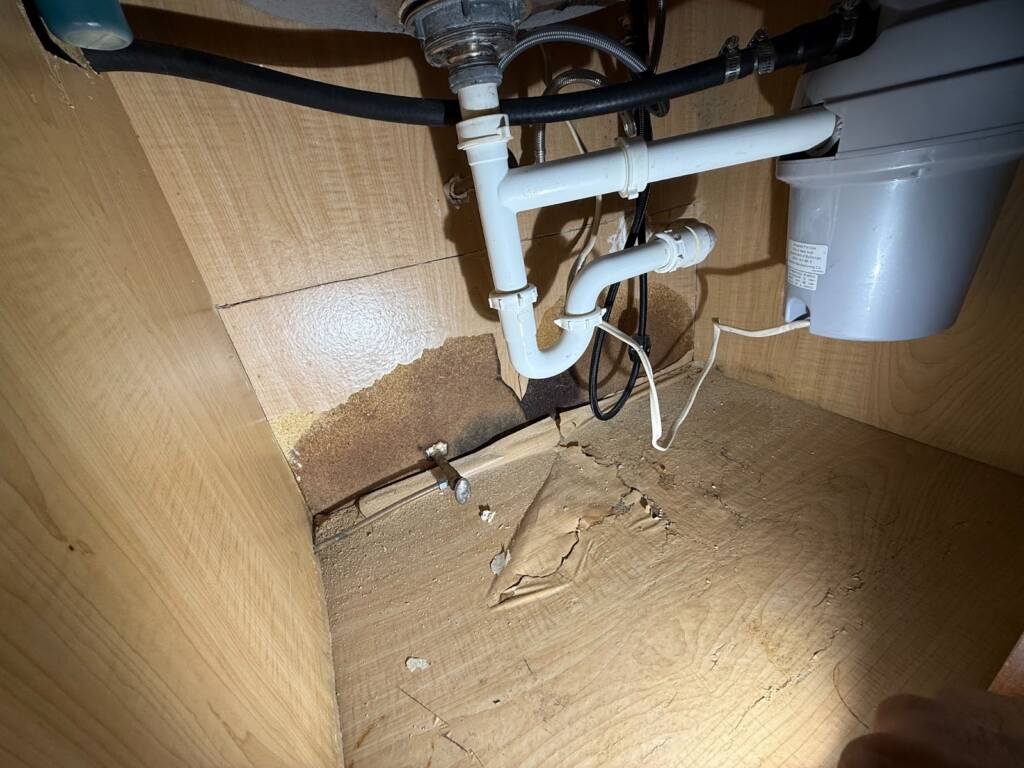
Kitchen cabinets are exposed to moisture from multiple sources, often over extended periods.
Common causes include:
- Slow leaks under sinks or behind dishwashers
- Condensation from cold water supply lines
- Steam and humidity from cooking without adequate ventilation
- Appliance failures such as dishwashers, refrigerators, or ice makers
- Past water events that were never fully dried
According to the EPA, materials that remain damp for 24–48 hours can begin supporting mold growth. Wood-based cabinet materials such as particleboard and MDF are especially vulnerable because they absorb moisture and lose structural strength when wet.
How can you tell if cabinet damage is cosmetic or structural?
Determining how deeply moisture has penetrated is the most important decision point.
Cosmetic or surface-level damage
Surface damage affects finishes rather than the cabinet structure and may include:
- White or cloudy water stains
- Peeling laminate or veneer
- Bubbling finishes
- Minor edge swelling
If the moisture source was brief and materials dried quickly, this type of damage may be repairable.
Structural or hidden damage
Structural damage indicates deeper moisture intrusion and often requires professional restoration:
- Warped, sagging, or soft cabinet panels
- Crumbling particleboard or MDF
- Doors that no longer align or close properly
- Musty odors or visible mold inside cabinets
Odors are a key warning sign. Even when surfaces appear dry, trapped moisture can allow mold and bacteria to persist inside cabinet materials, continuing to affect indoor air quality.
Can water-damaged kitchen cabinets be repaired without replacement?
In limited situations, yes.
Cabinets may be repairable if:
- The moisture source has been fully corrected
- Damage is limited to finishes or exterior surfaces
- Cabinet materials have not softened, swelled, or grown mold
However, once cabinet cores absorb water or remain damp internally, cosmetic repairs alone will not stop ongoing deterioration. Adhesives can continue breaking down, and microbial growth can persist even after visible damage is addressed.
When does water damage require professional restoration?
Professional restoration is recommended when cabinet damage involves more than surface finishes.
Call a professional if you notice:
- Prolonged or repeated water exposure
- Structural deterioration or softness
- Persistent musty or sour odors
- Visible mold growth
- Damage extending into walls, flooring, or subflooring
At this stage, cabinet damage is usually part of a broader moisture problem that cannot be resolved with spot repairs.
How does BioSweep restore water-damaged kitchen cabinets?
BioSweep approaches cabinet water damage as a moisture and indoor air quality issue, not just a visual one.
Professional restoration may include:
- Moisture detection and mapping to locate hidden wet areas
- Controlled drying using commercial-grade dehumidification and airflow
- Antimicrobial treatments to address mold and bacterial contamination
- Odor neutralization to remove microbial by-products
- Coordination of repair or replacement once materials are stabilized
By addressing both materials and air quality, BioSweep helps prevent recurring damage after repairs are completed.
Will insurance cover water-damaged kitchen cabinets?
Insurance coverage depends on the cause of the water damage.
- Sudden water events, such as burst pipes or appliance failures, are more likely to be covered
- Long-term leaks, slow seepage, or humidity-related damage are often excluded
BioSweep provides moisture documentation, photo logs, and remediation records to support insurance claim evaluation when applicable.
How can you prevent future water damage to kitchen cabinets?
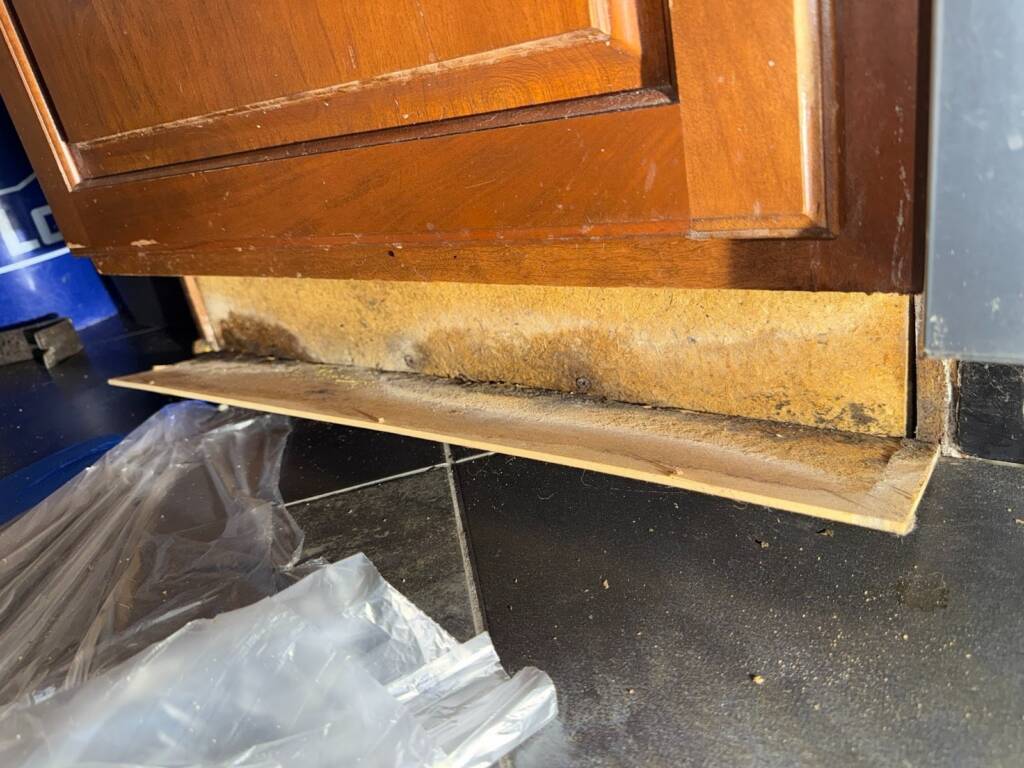
Prevention focuses on moisture control and early detection:
- Inspect under-sink plumbing and appliance connections regularly
- Address leaks immediately, even if damage appears minor
- Use exhaust fans during cooking to reduce humidity
- Maintain indoor relative humidity between 40–50 percent
- Avoid blocking airflow inside cabinets
Early action can prevent small moisture issues from turning into major restoration projects.
Next step
Water-damaged kitchen cabinets are more than a cosmetic concern. Left untreated, minor staining or bubbling can progress into structural failure, mold growth, and indoor air quality problems.
If you are noticing warping, odors, staining, or signs of prolonged moisture, contact BioSweep for a professional water damage assessment. BioSweep will identify the source, stabilize the environment, and help determine whether your cabinets can be safely restored or should be replaced.
Addressing the problem early protects both your kitchen and the health of your indoor environment.